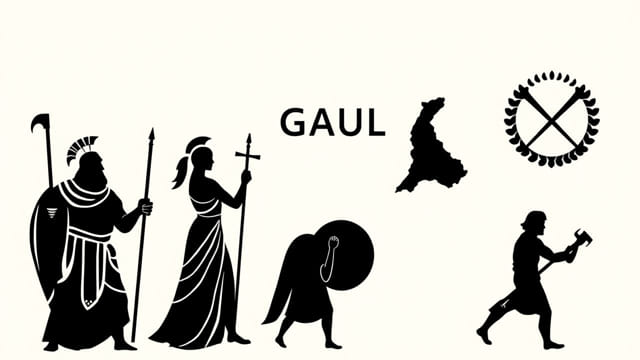
In the annals of ancient history, few regions hold the same level of intrigue and cultural richness as Ancient Gaul. This historical area, widely known due to its encounters with the Roman Empire and its fierce tribal warriors, plays a significant role in understanding the early formation of modern Western Europe. The legacy of Gaul is still visible today in languages, regional identities, and archaeological discoveries. To understand where Ancient Gaul was located, it is essential to explore its geography, the people who lived there, and its transformation over centuries.
Geographical Location of Ancient Gaul
Ancient Gaul was located in what is now modern-day Western Europe. Geographically, it stretched across a vast region that includes present-day France, Luxembourg, Belgium, most of Switzerland, parts of Northern Italy, as well as areas of the Netherlands and Germany on the west side of the Rhine River. This expansive territory made Gaul one of the most significant and strategically important regions in pre-Roman and Roman Europe.
Main Regions of Gaul
Gaul was not a single unified country but rather a collection of tribal territories. The Romans divided Gaul into several major regions, each with its unique characteristics:
- Gallia Celtica– This was the largest part of Gaul and included much of what is now France. It was inhabited primarily by Celtic tribes and known for its rich agriculture and tribal confederacies.
- Gallia Belgica– Located in the north, encompassing parts of present-day Belgium, Luxembourg, and northern France. The Belgae tribes who lived here were considered among the most formidable opponents to Roman conquest.
- Gallia Cisalpina– Meaning Gaul on this side of the Alps, this area was located in northern Italy. Though considered part of Gaul culturally, it was closer to the Roman heartland and was one of the first regions to be absorbed into the Roman Republic.
- Gallia Transalpina– Also known as Gaul across the Alps, this was the Roman term for the Gaulish lands beyond the mountain range, mainly referring to southern France.
- Gallia Aquitania– Found in southwestern Gaul, this region bordered the Pyrenees and the Atlantic Ocean and was home to tribes with cultural influences from both Celtic and Iberian traditions.
The Inhabitants of Gaul
The people of Gaul were primarily Celtic-speaking tribes known collectively as the Gauls. These tribes were diverse in customs and leadership structures, and they lived in fortified settlements called oppida. The Gauls were skilled metalworkers, farmers, and warriors. They traded with neighboring regions and developed sophisticated religious and social systems.
Key Tribes of Ancient Gaul
- Arverni– A powerful tribe located in central Gaul, known for resisting Roman expansion under the leadership of Vercingetorix.
- Sequani– Settled near the Jura Mountains, this tribe had conflicts with neighboring tribes and appealed to external powers like the Germans and Romans for support.
- Parisii– A smaller tribe settled along the Seine River; they are believed to be the namesake of modern-day Paris.
- Aedui– Initially allies of Rome, they were located in eastern Gaul and often played a diplomatic role during conflicts.
Gaul and the Roman Empire
The most significant turning point in the history of Gaul came with the Roman conquest led by Julius Caesar during the Gallic Wars (58-50 BCE). Through a series of military campaigns, Caesar systematically defeated the various tribes and brought Gaul under Roman control. This conquest was documented in Caesar’s own writings, Commentarii de Bello Gallico (Commentaries on the Gallic War), which provide much of what we know today about ancient Gaul.
Vercingetorix and the Battle of Alesia
One of the most iconic events of this period was the uprising led by Vercingetorix, a chieftain of the Arverni. He attempted to unite the Gaulish tribes against the Roman invaders. Although initially successful, Vercingetorix was eventually defeated at the Battle of Alesia in 52 BCE. He surrendered to Caesar and was later executed in Rome. This marked the end of major resistance in Gaul and the beginning of its incorporation into the Roman Empire.
Romanization of Gaul
After the conquest, Gaul underwent a period of Romanization, where Roman laws, language (Latin), architecture, and infrastructure became dominant. Roman cities were built on the ruins or beside the old tribal settlements, roads connected far-flung regions, and trade flourished. Over time, many Gauls adopted Roman customs and citizenship.
Legacy of Roman Gaul
The Roman influence in Gaul had a lasting impact. The Latin language evolved into the various Romance languages, most notably French. Cities like Lyon (Lugdunum), Paris (Lutetia), and Marseille (Massalia) still bear traces of Roman infrastructure. The fusion of Gallic and Roman culture laid the groundwork for the development of medieval European kingdoms.
Decline of Roman Control and Transition
By the 5th century CE, Roman authority in Gaul weakened due to internal strife and pressure from Germanic tribes such as the Visigoths and Franks. The collapse of the Western Roman Empire led to the rise of new political entities. The Franks eventually took over large portions of Gaul and founded the Merovingian Dynasty, which would evolve into modern France.
Why the Location of Gaul Matters Today
Understanding where Ancient Gaul was located helps historians trace the formation of European national identities and political boundaries. The cultural and linguistic roots established during both the Gallic and Roman periods continue to influence European society today. Modern France, in particular, sees itself as a direct descendant of Roman Gaul, often invoking this heritage in national narratives.
Sites and Remnants of Ancient Gaul
Today, visitors can explore numerous archaeological sites that offer a glimpse into Gaul’s past:
- Gergovia– Near Clermont-Ferrand, site of Vercingetorix’s victory over Caesar.
- Alésia– Site of the decisive Roman victory in 52 BCE.
- Autun (Augustodunum)– A Roman city with well-preserved ruins.
- Lyon– Former capital of Roman Gaul, rich with ancient remnants and museums.
Ancient Gaul was a vast and culturally vibrant region that played a crucial role in European history. Located across much of what is now Western Europe, Gaul was home to Celtic tribes that developed their own identities before being integrated into the Roman Empire. Its location, strategic value, and historical developments shaped the course of Western civilization. Today, the memory of Gaul remains embedded in language, architecture, and the very foundations of nations like France. For those studying the evolution of Europe, understanding where Ancient Gaul was located is a fundamental step toward grasping the broader story of human history.