The Visigoths were one of the most significant Germanic tribes in European history. They played a key role in the decline of the Western Roman Empire and eventually established a powerful kingdom of their own. Their story spans from migration and warfare to eventual settlement across different parts of Europe. To understand where the Visigoths were located, it is essential to trace their geographic journey over centuries, from their origins in Eastern Europe to their final kingdom in the Iberian Peninsula.
Origins of the Visigoths
The Visigoths were originally part of the larger Gothic people, a Germanic tribe believed to have originated in what is now Scandinavia. Around the 2nd and 3rd centuries CE, the Goths migrated southwards and eastwards into regions around the Black Sea. This area, now modern-day Ukraine and Romania, became the early homeland of the Visigoths, also known as the Western Goths.
Separation from the Ostrogoths
The Goths eventually divided into two major groups: the Ostrogoths (Eastern Goths) and the Visigoths (Western Goths). While the Ostrogoths settled in Eastern Europe, the Visigoths began moving toward the Roman Empire’s borders, especially near the Danube River. The region of Dacia, corresponding to parts of present-day Romania, was a key area of early Visigothic settlement.
The Visigoths and the Roman Empire
The Visigoths came into direct contact with the Roman Empire in the late 4th century CE. Pressured by the advancing Huns from the east, the Visigoths sought refuge inside Roman territories. In 376 CE, they were allowed to cross the Danube into Roman lands in the Balkans.
- Balkans: After crossing the Danube, the Visigoths were located in regions that now include Bulgaria and Serbia.
- Adrianople: In 378 CE, they famously defeated the Roman army at the Battle of Adrianople (modern-day Edirne in Turkey).
Following this battle, the Visigoths roamed through the Balkans and into Italy. In 410 CE, under the leadership of Alaric I, they sacked Rome a major historical event that marked the weakening of Roman authority.
Settlement in Gaul and Spain
After their time in Italy, the Visigoths moved further west and were eventually granted land by the Romans in southern Gaul (modern-day France). By 418 CE, they had established the Visigothic Kingdom in the region of Aquitaine, around Toulouse. This marked the beginning of a permanent Visigothic presence in Western Europe.
Expansion into the Iberian Peninsula
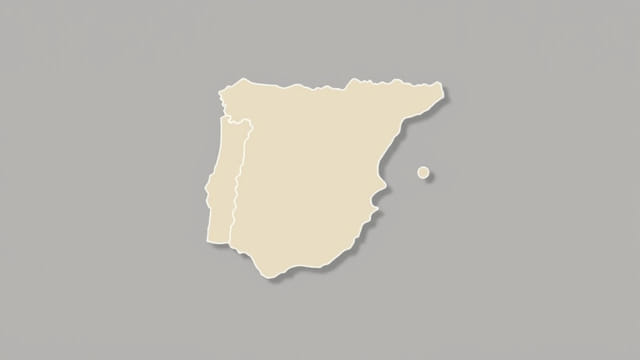
As the Western Roman Empire crumbled, the Visigoths expanded their territory further south into the Iberian Peninsula, which comprises modern-day Spain and Portugal. By the early 6th century, they had moved their capital from Toulouse to Toledo in central Spain. This transition marked the height of Visigothic power.
- Toledo: The city became the political and cultural heart of the Visigothic Kingdom.
- Seville and Mérida: These cities also played important roles in Visigothic governance and religion.
- Entire Iberian Peninsula: By the mid-6th century, the Visigoths controlled almost all of the Iberian Peninsula except for some coastal areas.
Visigothic Kingdom in Hispania
The Visigothic Kingdom in Hispania lasted until the early 8th century. It was characterized by a blending of Roman and Germanic cultures. The Visigoths adopted Latin as their administrative language and converted from Arian Christianity to Roman Catholicism in the late 6th century, helping unify their subjects.
During this period, the Visigothic territory was centered in what is today Spain. The kingdom stretched across much of the peninsula, including:
- Castile
- Extremadura
- Andalusia
- Galicia
- Aragon
- Valencia
The Visigothic influence is still visible in Spanish legal traditions, architecture, and place names, particularly in cities like Toledo and Mérida.
Decline and Fall
The Visigothic Kingdom fell in 711 CE when Muslim forces from North Africa invaded the Iberian Peninsula. Led by Tariq ibn Ziyad, the Umayyad Caliphate’s armies defeated King Roderic, the last Visigothic ruler, at the Battle of Guadalete. This event marked the beginning of Muslim rule in much of Spain and the end of the Visigothic era.
Despite their downfall, the Visigoths left a lasting legacy in the Iberian Peninsula. Their laws, known as the Visigothic Code, influenced later Spanish legal systems. Moreover, the Catholic Church in Spain continued many practices that originated during Visigothic rule.
Modern Recognition of Visigothic Locations
Today, many historical sites in Spain are associated with the Visigoths. Archaeological remains of Visigothic buildings, such as churches and palaces, have been uncovered in various locations. Museums across Spain, especially in Toledo and Madrid, display artifacts from the Visigothic era.
Key Visigothic Locations
- Toledo: The former capital still holds relics of Visigothic architecture and artifacts.
- Mérida: Known for its Roman ruins, the city also has remains from the Visigothic period.
- Barcelona: Although more associated with later periods, the city was part of the Visigothic Kingdom.
To answer the question ‘where is Visigoths located’ requires a journey through both time and space. The Visigoths originated in Eastern Europe near the Black Sea, moved through the Balkans and Italy, settled in southern Gaul, and finally established a powerful kingdom in the Iberian Peninsula. While their geographical footprint shifted over the centuries, their most significant and lasting presence was in what is now modern-day Spain and Portugal. Their influence continues to be felt through Spanish culture, religion, and legal traditions. Understanding where the Visigoths were located helps us appreciate the complexity of European history and the lasting impact of migration, conquest, and cultural exchange.