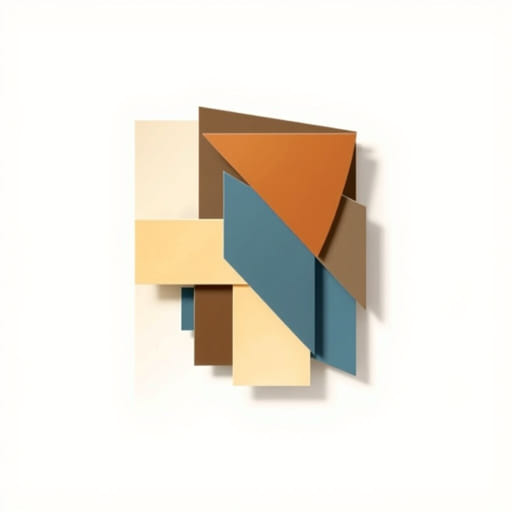
What Is Analytic Cubism? Exploring the Origins, Style, and ImpactAnalytic Cubism is one of the most important movements in modern art history. It represents a revolutionary approach to visual representation, challenging traditional perspectives and creating new ways to see the world. Developed in the early 20th century by artists Pablo Picasso and Georges Braque, Analytic Cubism broke down objects into fragmented shapes and multiple viewpoints. This style invites viewers to look deeper and engage actively with the artwork.
What Is Analytic Cubism?
Analytic Cubism is the first phase of Cubism, appearing around 1907 and lasting until about 1912. It focuses on analyzing subjects by breaking them into basic geometric forms. Instead of showing objects from a single viewpoint, artists presented multiple angles simultaneously, creating a complex, abstract image.
Key features of Analytic Cubism include
-
Fragmentation of objects into geometric shapes
-
Use of muted, earthy colors like browns, grays, and greens
-
Flattened, two-dimensional appearance
-
Overlapping planes and intersecting lines
-
Minimal use of bright colors or clear outlines
This approach challenges the idea of realistic representation, emphasizing the idea of perception over mere appearance.
Origins and Development of Analytic Cubism
The movement began as a collaboration between Picasso and Braque in Paris. They were inspired by earlier artistic trends, including
-
Post-Impressionism The use of color and brushstroke to express emotion
-
African and Iberian art Simplified and abstracted human forms
-
Paul Cézanne’s work Use of geometric shapes to represent nature
Between 1907 and 1912, Picasso and Braque experimented by breaking down still life, portraits, and landscapes into fragmented parts. Their goal was not to recreate reality but to analyze and represent the essence of the subject.
Characteristics of Analytic Cubism
Analytic Cubism is recognized by several distinctive features
Fragmentation and Multiple Perspectives
Instead of showing an object from one side, the artist breaks it apart and rearranges it on the canvas. This technique allows the viewer to see several sides of the same object at once. For example, a violin or a bottle might be depicted with overlapping geometric shapes revealing different angles simultaneously.
Limited Color Palette
The color scheme tends to be monochromatic or subdued. This choice directs focus on form and structure rather than distracting with vivid colors. Typical colors include grays, browns, and ochres.
Flattened Space and Interlocking Planes
Analytic Cubism rejects traditional depth and perspective. Instead, it uses overlapping flat shapes to suggest volume. The planes interlock, giving a sense of fragmented space rather than realistic depth.
Famous Examples of Analytic Cubism
Some iconic artworks showcase Analytic Cubism’s unique style. Among them
-
Pablo Picasso’s Portrait of Daniel-Henry Kahnweiler (1910) This portrait deconstructs the figure into angular planes and muted tones.
-
Georges Braque’s Violin and Palette (1909-1910) A still life where the violin is broken into geometric shapes and merged with the background.
-
Picasso’s Ma Jolie (1911-1912) A complex composition with fragmented text and shapes overlapping.
These paintings are difficult to interpret at first but reward close observation with their rich visual language.
How Analytic Cubism Changed Art
Analytic Cubism radically changed how artists approached representation. It
-
Questioned the traditional rules of perspective and realism
-
Encouraged artists to think about form, structure, and space differently
-
Inspired later movements like Synthetic Cubism, Futurism, and Abstract art
-
Influenced not only painting but also sculpture, architecture, and design
By presenting multiple viewpoints at once, Analytic Cubism opened new possibilities for visual storytelling and expression.
Difference Between Analytic Cubism and Synthetic Cubism
Analytic Cubism was followed by Synthetic Cubism, which differs in several ways
| Aspect | Analytic Cubism | Synthetic Cubism |
|---|---|---|
| Time Period | 1907-1912 | 1912 onwards |
| Approach | Breaking down objects into fragments | Building up images using collage and simple shapes |
| Color Palette | Muted, earthy tones | Brighter colors and mixed media |
| Texture | Mostly flat, painted surface | Use of texture, paper, and materials |
| Visual Style | Complex, abstract, overlapping planes | Simpler, more decorative compositions |
Synthetic Cubism is considered a development or reaction to Analytic Cubism, focusing on constructing images rather than deconstructing them.
Why Analytic Cubism Matters Today
Even a century after its emergence, Analytic Cubism remains a key reference point in art education and history. It challenges viewers to question what they see and think about how we perceive objects and space. The movement’s influence is visible in contemporary art, design, and even digital media, where fragmentation and multiple perspectives continue to inspire creativity.
Analytic Cubism represents a major shift in the art world. By breaking objects into geometric shapes and showing multiple angles at once, Picasso and Braque created a new way of seeing. This movement laid the foundation for many modern art developments and continues to influence artists and designers today.
Understanding Analytic Cubism helps us appreciate how artists can explore reality beyond the surface, encouraging us to look deeper and see the world from different perspectives.