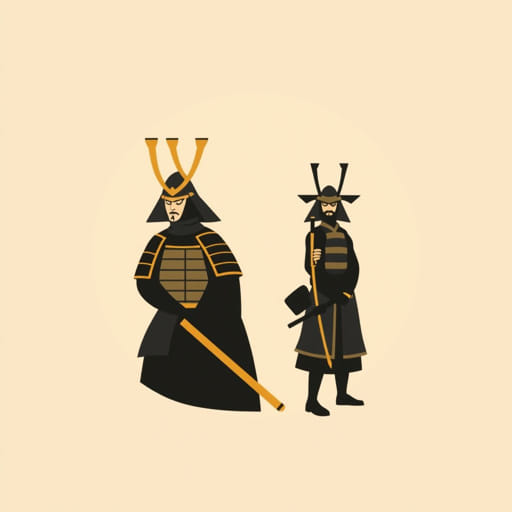
In the grand narrative of Japanese history, few figures have captured the imagination of the public quite like Minamoto no Yoshitsune, often affectionately referred to by his childhood name, Ushiwakamaru. Revered as a tragic hero, celebrated as a military genius, and mourned as a victim of political betrayal, his life has become the subject of countless legends, theatrical plays, and folklore tales. The story of Ushiwakamaru’s transformation into the warrior Minamoto no Yoshitsune continues to echo through Japan’s cultural and historical consciousness, embodying the ideals of bravery, honor, and tragic destiny.
Early Life of Ushiwakamaru
Ushiwakamaru was born in 1159 as the ninth son of Minamoto no Yoshitomo, the head of the powerful Minamoto clan. His birth coincided with the Heiji Rebellion, a violent conflict that ultimately led to the death of his father and the downfall of the Minamoto family at the hands of their rivals, the Taira clan. To ensure his survival, the infant Ushiwakamaru was spared and sent to Kurama Temple near Kyoto, where he was raised by monks.
At Kurama, the young Ushiwakamaru is said to have received a classical education in Buddhism, literature, and martial arts. According to legend, he was trained in swordsmanship by the mythical tengu, long-nosed mountain spirits known for their combat skills. These tales, while likely apocryphal, helped to construct the larger-than-life persona of Minamoto no Yoshitsune and his connection to supernatural forces.
The Rise of Minamoto no Yoshitsune
As he grew older, Ushiwakamaru began to embrace his destiny. Around the age of 15, he left Kurama and made his way to the north, eventually aligning himself with his half-brother, Minamoto no Yoritomo, who was leading a rebellion against the ruling Taira clan. It was during this time that Ushiwakamaru shed his childhood name and emerged as Minamoto no Yoshitsune, a name that would soon strike fear into the hearts of his enemies.
The Genpei War
The Genpei War (1180-1185) was a civil conflict between the Minamoto and Taira clans. Yoshitsune quickly distinguished himself as a brilliant strategist and fearless warrior. Among his most celebrated military victories was the Battle of Ichi-no-Tani in 1184, where he led a surprise attack by descending a steep cliff to flank the Taira forces. This bold move led to a decisive Minamoto victory.
Another key battle was the naval engagement at Dan-no-ura in 1185. Yoshitsune’s tactical ingenuity contributed significantly to the Minamoto’s final triumph over the Taira. This victory not only marked the end of the Taira clan’s dominance but also established the Minamoto as the supreme military power in Japan. Yoritomo became the first shogun, founding the Kamakura shogunate.
Yoshitsune’s Fall from Grace
Despite his loyalty and battlefield success, Minamoto no Yoshitsune soon found himself at odds with his brother Yoritomo. Suspicious of Yoshitsune’s growing popularity and military prowess, Yoritomo began to view him as a political threat. Yoshitsune’s close association with court nobles in Kyoto only fueled this suspicion. In 1185, Yoritomo formally accused Yoshitsune of treason, forcing him to flee the capital.
Yoshitsune wandered through Japan with a small group of loyal followers, seeking sanctuary. His legendary journey, marked by constant peril and near-mythic escapes, added to his status as a tragic hero. Eventually, he found refuge in the northern province of Mutsu under the protection of Fujiwara no Hidehira. However, following Hidehira’s death, Yoshitsune was betrayed by Hidehira’s son and surrounded by forces loyal to Yoritomo. Rather than be captured, Yoshitsune took his own life in 1189 at the age of 30.
Legacy and Cultural Impact
The story of Ushiwakamaru and Minamoto no Yoshitsune has endured for centuries, becoming deeply embedded in Japanese culture. His life has been romanticized in various forms of traditional Japanese art, including Noh and Kabuki theater, where he is portrayed as a noble and tragic warrior, often accompanied by the loyal retainer Benkei.
Folktales and Myths
Many legendary tales surround the young Ushiwakamaru, especially his duel on Gojo Bridge against the warrior monk Benkei. In this story, Benkei challenged travelers to single combat, taking their swords as trophies. After defeating 999 men, he was finally bested by the agile and clever Ushiwakamaru. Impressed by the boy’s skill and courage, Benkei pledged his loyalty to him, becoming his most faithful companion until the very end.
Symbol of Loyalty and Resistance
Minamoto no Yoshitsune’s life has been interpreted as a symbol of loyalty, perseverance, and tragic destiny. His unjust persecution by his own brother has sparked sympathy and admiration, with many viewing him as a hero who remained true to his principles even in the face of betrayal. This narrative has been used in modern literature, television, and popular media, reinforcing his enduring appeal across generations.
Historical vs. Legendary Yoshitsune
While the historical details of Yoshitsune’s life are rooted in real events, the boundaries between fact and legend have become blurred over time. Historians acknowledge his military achievements and political misfortune, but much of the detail surrounding his early life, his encounters with mythical beings, and even his death are embellished with elements of folklore. This blend of history and myth has made Yoshitsune not just a historical figure, but a cultural archetype in Japan’s collective memory.
From the quiet temples of Kurama to the bloodstained battlefields of the Genpei War, the journey of Ushiwakamaru Minamoto no Yoshitsune is one of the most compelling stories in Japanese history. His transformation from a sheltered child monk into a revered general and ultimately a betrayed fugitive reflects the complexities of power, loyalty, and ambition during one of Japan’s most turbulent eras. Whether viewed through a historical lens or the romantic filter of legend, Yoshitsune’s life continues to inspire, offering timeless lessons in courage, honor, and the tragic cost of greatness.