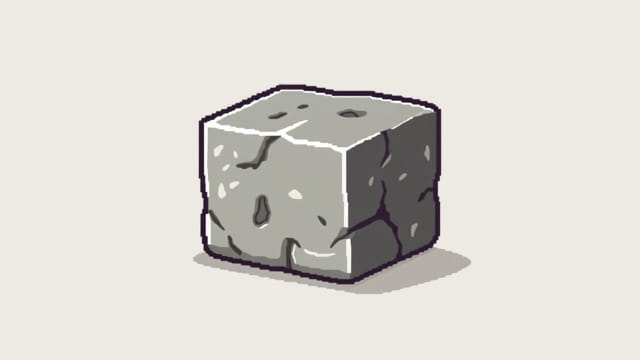
Terraria offers a wide variety of biomes and blocks, each with their own mechanics and rules. Players who dive deep into the game’s underground structures often encounter the Granite biome, a visually striking area filled with dark, bluish blocks and unique enemies like Granite Elementals. A common concern among Terraria players, especially in Hardmode, is whether certain biomes or materials can become corrupted or otherwise infected. This leads to the question:Is Granite corruptible in Terraria?The answer is more complex than a simple yes or no, and it depends on your understanding of biome spread mechanics, corruption behavior, and how Terraria’s world generation works.
What Is Granite in Terraria?
Granite Biome Overview
The Granite biome is a small, naturally-occurring underground mini-biome. It appears as a compact cluster of smooth, bluish-black blocks with glowing elements. The primary block found in this biome is calledGranite Block, which can be mined and used as a decorative building material. This biome often contains Granite Golems and Elementals, making it a slightly challenging area in the early to mid-game phase.
Unlike major biomes like the Jungle, Desert, or Dungeon, the Granite biome is not extensive or vital to game progression. Still, its unique appearance and enemy types make it a point of interest for builders, explorers, and completionists alike.
Understanding Corruption in Terraria
What Is Corruption?
Corruption is one of the three major spreading biome types in Terraria, alongside Crimson and Hallow. These biomes have the ability to infect or spread to nearby blocks and change the nature of those blocks over time. Corruption begins in pre-Hardmode, but the rate and range of spread dramatically increase once Hardmode is activated after defeating the Wall of Flesh.
The corruption affects a wide range of blocks, particularly:
- Dirt blocks
- Sand and Ice
- Mud (in specific conditions)
Each affected block type becomes its corrupted variant, such as Ebonstone or Corrupt Ice. The corruption also affects nearby flora and fauna, changing trees, grass, and enemy types.
Can Granite Be Corrupted?
Granite Block Behavior
The key factor in whether a block or biome can become corrupted is whether it is infectable under Terraria’s biome spread system. Granite blocks are classified as a unique block type and do not have a corrupted, crimson, or hallowed variant. Because of this, Granite itselfcannot be directly corrupted. The biome remains visually and functionally intact even when surrounded by corrupted zones.
This means that if you build a structure out of Granite blocks, they will remain unchanged, even if corruption spreads to the area. This makes Granite a safe material for building, especially for those looking to construct protective paths, quarantine lines, or underground bases in Hardmode worlds.
Granite Biome Vulnerability
While the Granite blocks themselves cannot be corrupted, it’s important to note that thesurrounding environmentcan still be affected. If your Granite biome is adjacent to Stone or Dirt, those neighboring blocks can be infected, and corrupted enemies may spawn nearby. This does not alter the Granite biome directly, but it may affect mob spawning depending on how close corruption has spread.
Using Granite for Corruption Control
Because of its corruption immunity, Granite is often used by advanced players for biome protection and construction. Here are several ways to utilize Granite in your builds:
- Barrier construction: Create buffer zones around your Jungle or other vital biomes.
- Base building: Use Granite for home bases to prevent them from becoming corrupted.
- Pathways: Construct tunnels and bridges using Granite to create corruption-proof travel routes.
Keep in mind, however, that just using Granite is not always enough. If you leave corrupted stone or grass nearby, it may still spread around your build. Always remove nearby susceptible blocks to ensure full containment.
Interaction with Other Spreading Biomes
Besides Corruption, Terraria also features Crimson and Hallow biomes, each with their own spread mechanics. Just like with Corruption, Granite blocks are alsoresistant to Crimson and Hallow spread. None of these biomes have a Granite variant, so the block remains unaffected regardless of what type of spreading biome is nearby.
This cross-biome immunity makes Granite one of the few universally safe building materials when it comes to infection control in Terraria. Whether you’re dealing with Crimson chasms, Hallow caverns, or Corruption tunnels, Granite remains untouched.
Mob Spawning and Biome Purity
Does Corruption Near Granite Affect Enemy Spawns?
This is where things get a bit more nuanced. While Granite blocks do not become corrupted, their biome can be overtaken in terms ofenemy spawn behaviorif enough surrounding blocks are corrupted. Terraria determines spawn types based on the dominant biome in a given region. If corruption spreads heavily around your Granite biome, the game may start spawning corruption enemies instead of Granite ones.
This doesn’t mean the biome is corrupted it means the spawn conditions have changed. To preserve original Granite biome behavior and enemy types, you’ll need to keep nearby blocks uninfected by removing or isolating Stone, Dirt, and other susceptible materials.
Can Granite Spread or Convert Other Blocks?
Granite does not function like Corruption or Crimson in that it cannot spread or convert surrounding blocks. It is a static biome and does not grow or expand beyond its naturally generated cluster unless players manually place Granite blocks. It is anon-infectiousand non-propagating block.
This makes Granite particularly useful for map designers and survival players who want precise control over their world layout without worrying about biome expansion or infection mechanics.
Best Practices for Using Granite in Your World
Tips for Builders and Survivalists
- Use Granite as a barrier layer between your Jungle and Corruption to slow or stop infection spread.
- Combine Granite with other non-corruptible materials like Dungeon bricks for hybrid protection.
- Regularly monitor underground biomes in Hardmode to ensure corruption isn’t sneaking through nearby stone walls.
- Use Clentaminator with Green Solution to cleanse corrupted areas near Granite structures to preserve mob spawn zones.
In terms of aesthetics, Granite also works well with modern and magical builds thanks to its sleek and glowing appearance, giving players both function and form.
To answer the question directly:No, Granite is not corruptible in Terraria. It does not become infected by Corruption, Crimson, or Hallow, making it one of the safest materials for long-term builds and biome defense. However, surrounding areas can still be affected, and changes in mob spawn behavior may occur if nearby corruption becomes dominant. Using Granite smartly can help preserve key biomes, protect your structures, and maintain control in the unpredictable chaos of Hardmode Terraria. Whether you’re an experienced builder or preparing for your first Wall of Flesh battle, understanding how corruption interacts with different blocks including Granite will help you manage your world more effectively.