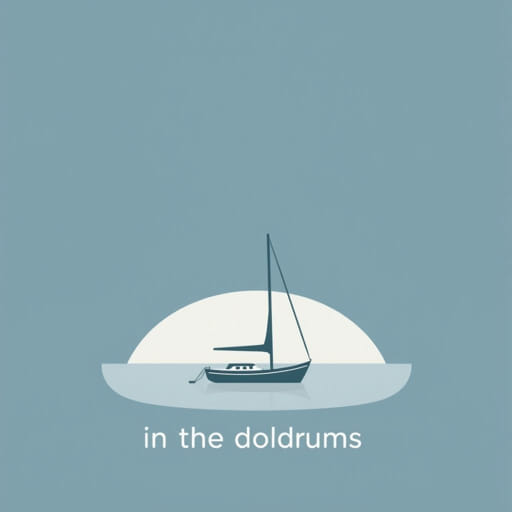
It’s not uncommon to come across the phrase in the doldrums in everyday English, especially when someone is describing a period of emotional slump, stagnation, or lack of energy. This idiom is rich in metaphor and history, and it often appears in both casual conversation and formal writing. Understanding what in the doldrums means, how it is used in idiomatic sentences, and the origin behind the phrase helps enrich vocabulary and deepens comprehension of English expressions.
Meaning of ‘In the Doldrums’
The idiom in the doldrums typically refers to a state of inactivity, listlessness, or depression. When someone says they are in the doldrums, it implies they are feeling unmotivated, bored, or emotionally low. This expression can also describe situations where progress is stalled, whether in business, personal life, or creative projects.
Examples of Meaning in Context
- After losing his job, he spent several months in the doldrums, unsure of what to do next.
- The economy has been in the doldrums for over a year, with no signs of recovery.
- She felt creatively drained and stuck in the doldrums, unable to paint anything new.
Origin of the Idiom
The phrase in the doldrums originates from maritime terminology. In nautical terms, the Doldrums refers to a region near the equator known for calm winds and unpredictable weather. Ships traveling through this area could be stuck for days or even weeks due to the lack of wind. Sailors used the term to describe the frustrating, stagnant experience of waiting for movement. Over time, this concept transferred to emotional and metaphorical contexts, symbolizing a state of standstill or depression.
Using ‘In the Doldrums’ in Idiomatic Sentences
To effectively use in the doldrums in a sentence, it’s important to match it with situations involving stagnation or low spirits. Below are varied examples that demonstrate how this idiom functions across different scenarios:
Emotional State
- Ever since her vacation ended, she’s been in the doldrums and hasn’t found the motivation to do anything productive.
- He admitted to feeling in the doldrums after moving away from his hometown.
Work and Career
- After the company restructuring, employee morale was in the doldrums.
- The writer found himself in the doldrums, unable to finish the final chapters of his novel.
Business and Economy
- Retail sales were in the doldrums until the holiday season boosted consumer spending.
- With the global market in the doldrums, investors are hesitant to take risks.
General Use
- My social life has been in the doldrums lately I haven’t gone out in weeks.
- Spring is the perfect time to shake off the winter doldrums and start fresh.
Synonyms and Similar Expressions
There are several other idiomatic expressions and words that carry similar meanings to in the doldrums. Understanding these alternatives can help add variety and depth to one’s English usage.
- Feeling blue
- Down in the dumps
- Stuck in a rut
- Low-spirited
- Uninspired
Examples Using Synonyms
- She was feeling blue after missing the concert she had looked forward to for months.
- He’s been stuck in a rut at work, doing the same tasks over and over.
How to Get Out of the Doldrums
Being in the doldrums can affect both personal well-being and productivity. Here are some helpful suggestions for getting out of that state and regaining a sense of motivation and energy:
1. Change Your Environment
Sometimes, a shift in surroundings can help break the monotony. This can be as simple as rearranging your workspace or taking a walk outside to refresh your mind.
2. Set Small, Achievable Goals
Start by accomplishing manageable tasks. This creates momentum and helps build confidence, slowly pulling you out of a stagnant state.
3. Talk About It
Sharing feelings with friends or loved ones often brings relief. It’s a reminder that you’re not alone and that support is available.
4. Reignite Passions
Revisit hobbies or interests that once brought you joy. Engaging in creative or physical activities can be revitalizing.
5. Get Organized
Decluttering your space or planning your day can bring clarity and a sense of control, reducing the overwhelmed feeling that sometimes accompanies the doldrums.
Common Mistakes to Avoid
It’s important to use the idiom correctly to avoid confusion. Below are a few things to watch for:
- Don’t confuse it with literal weather descriptions. While it has nautical origins, it is not used today to describe actual weather patterns.
- Use it for situations involving inactivity or low emotional states, not for anger or extreme emotions.
- It is generally used in informal or semi-formal contexts, not overly formal writing.
Impact of Idioms on English Fluency
Mastering idiomatic expressions like in the doldrums is essential for achieving fluency in English. Idioms provide cultural and emotional depth to communication. They make language richer, more relatable, and engaging. Learning the context, tone, and nuances of idioms helps non-native speakers sound more natural and understand native speech more clearly.
Understanding the idiom in the doldrums involves more than just knowing its dictionary definition. It requires grasping its emotional undertones, historical roots, and diverse applications in daily language. From describing economic stagnation to personal lack of motivation, this phrase captures a range of human experiences with simplicity and precision. Whether you’re learning English or looking to enhance your vocabulary, idioms like in the doldrums offer a valuable lens into expressive, natural communication.