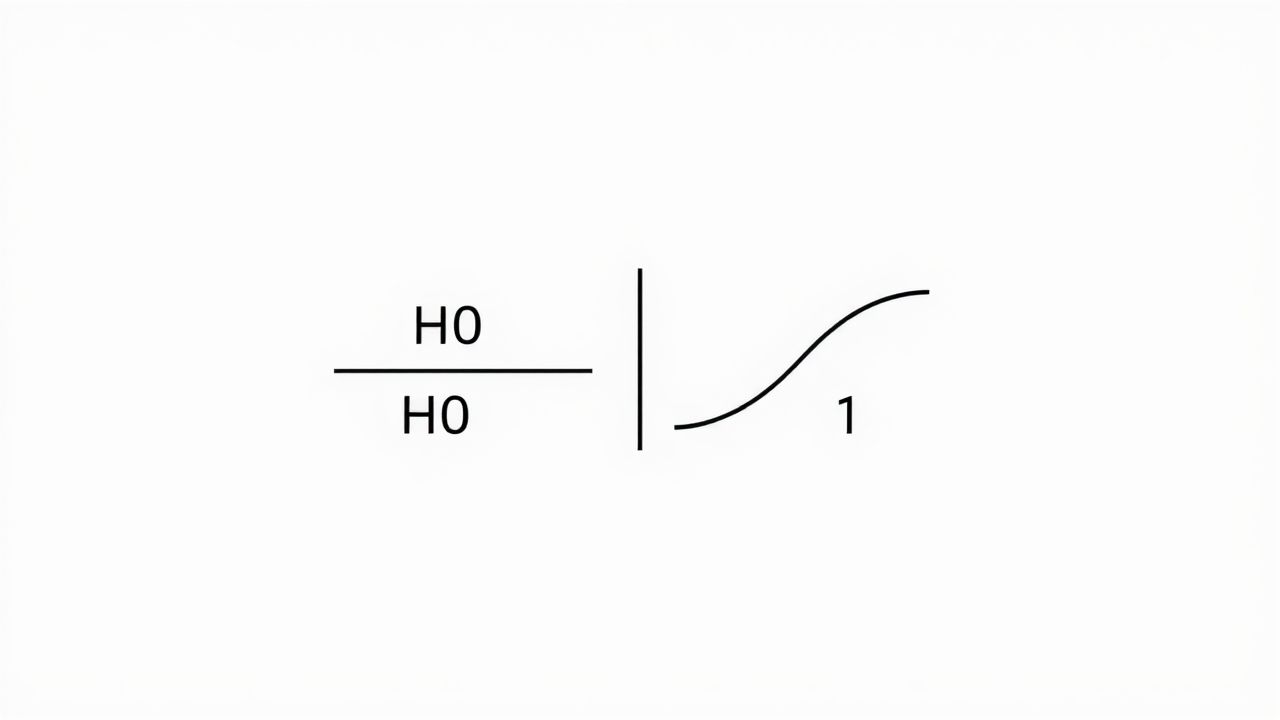
In the world of statistics and scientific research, forming hypotheses is one of the most important steps when analyzing data. Two key terms that every student, researcher, or data analyst should understand are the null hypothesis and the alternative hypothesis. These concepts help define the relationship between variables and guide the testing process in any empirical study. Understanding the roles and differences between null and alternative hypotheses can enhance the clarity, purpose, and reliability of any statistical investigation or experiment.
Definition of Hypothesis in Statistics
What Is a Hypothesis?
A hypothesis is a tentative assumption or educated guess that researchers make before conducting an experiment or data analysis. It reflects a belief about how two or more variables are related. Hypotheses are crucial because they set the foundation for the design of an experiment, the type of analysis used, and how results are interpreted.
The Two Types of Hypotheses
In hypothesis testing, there are always two opposing hypotheses:
- Thenull hypothesis(denoted as H₀)
- Thealternative hypothesis(denoted as H₁ or Ha)
These two statements cannot both be true at the same time. The process of hypothesis testing involves using statistical tools to decide which of these hypotheses is more likely to be supported by the data.
Understanding the Null Hypothesis (H₀)
Definition of Null Hypothesis
The null hypothesis is the default or original assumption that there is no relationship or no significant difference between variables. It is a conservative statement, often used to represent the status quo or a lack of effect.
Examples of Null Hypothesis
- There is no difference in test scores between students who study with music and those who do not.
- A new drug has no effect on patient recovery compared to the existing treatment.
- The average height of male students in a school is equal to 170 cm.
Role of the Null Hypothesis
In statistical testing, we assume the null hypothesis is true unless evidence proves otherwise. This principle ensures that researchers do not make bold claims without solid proof. The null hypothesis is tested directly using statistical methods such as t-tests, chi-square tests, or ANOVA, depending on the data and research design.
Exploring the Alternative Hypothesis (H₁ or Ha)
Definition of Alternative Hypothesis
The alternative hypothesis contradicts the null hypothesis. It states that there is a real effect or a true difference between groups or conditions. If the data provides strong evidence against the null hypothesis, the alternative hypothesis is accepted instead.
Examples of Alternative Hypothesis
- Students who study with music perform differently on tests compared to those who do not.
- The new drug significantly improves patient recovery rates.
- The average height of male students is not equal to 170 cm.
Types of Alternative Hypotheses
There are two main types of alternative hypotheses:
- One-tailed hypothesis: Predicts the direction of the effect (e.g., scores will be higher).
- Two-tailed hypothesis: Predicts a difference but not the direction (e.g., scores will be different).
The choice between one-tailed and two-tailed depends on the research question and the kind of evidence being sought.
Key Differences Between Null and Alternative Hypotheses
Comparison Table
| Aspect | Null Hypothesis (H₀) | Alternative Hypothesis (H₁) |
|---|---|---|
| Meaning | No difference or effect | There is a difference or effect |
| Role | Assumed to be true unless proven otherwise | Accepted if null hypothesis is rejected |
| Statistical Testing | Directly tested | Implied by rejection of H₀ |
| Purpose | To provide a benchmark | To offer an alternative explanation |
Steps in Hypothesis Testing
1. State the Hypotheses
Clearly define the null and alternative hypotheses based on your research question.
2. Choose the Significance Level (α)
The significance level is the probability of rejecting the null hypothesis when it is actually true. Common values are 0.05 or 0.01.
3. Select the Appropriate Test
Choose a statistical test depending on your data type and sample size. Examples include t-tests, z-tests, or non-parametric tests.
4. Calculate the Test Statistic
Using the chosen test, calculate the statistic value that summarizes your data (e.g., t-value, z-score).
5. Determine the p-Value
The p-value helps you decide whether to reject the null hypothesis. A smaller p-value (typically less than 0.05) indicates strong evidence against H₀.
6. Make a Conclusion
If the p-value is less than the significance level, reject the null hypothesis. Otherwise, do not reject it.
Common Mistakes in Interpreting Hypotheses
Misunderstanding Rejection
Rejecting the null hypothesis does not prove the alternative hypothesis with 100% certainty. It only suggests that the data is more consistent with the alternative hypothesis.
Accepting the Null Hypothesis
If you fail to reject the null, it does not mean the null is true. It simply means there is not enough evidence to support the alternative.
P-Value Confusion
Many people misinterpret p-values. A p-value is not the probability that the null hypothesis is true. It is the probability of observing the data (or more extreme) if the null hypothesis is true.
Applications of Hypothesis Testing
In Medicine
Used to test whether a new treatment is more effective than the standard method.
In Business
Applied to compare sales strategies, pricing models, or customer satisfaction levels.
In Education
Used to evaluate the effectiveness of new teaching methods or study programs.
In Psychology
Important for testing theories about human behavior, emotions, or mental processes.
The concepts of null and alternative hypotheses are essential for anyone involved in data analysis, academic research, or evidence-based decision-making. They offer a systematic way to test ideas and draw conclusions from data. By understanding the purpose of the null hypothesis, recognizing the role of the alternative, and correctly applying statistical tests, researchers can make more accurate, objective, and meaningful interpretations. These tools are foundational in statistics and continue to play a major role in shaping knowledge across scientific and professional fields.