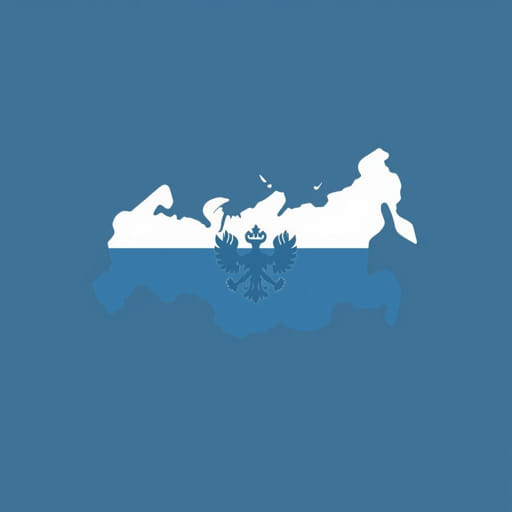
The centralization of power in Russia was a long and complex historical process shaped by a combination of military ambition, dynastic consolidation, religious authority, and administrative reform. From the rise of Muscovy in the 14th century to the reigns of autocratic tsars and the policies of Soviet leaders, Russia gradually evolved from a loose collection of fragmented principalities into a highly centralized empire and later, a modern centralized state. This transformation required the reduction of local autonomy, the subordination of the nobility, and the creation of a strong bureaucratic and military structure to enforce state control across vast territories.
The Rise of Moscow and Early Centralization
From Fragmentation to Consolidation
Following the Mongol invasion in the 13th century, the former Kievan Rus’ lands were divided into numerous principalities, each ruled by its own prince. Among these, the Grand Duchy of Moscow (Muscovy) gradually rose to prominence by aligning with the Mongol rulers while also absorbing neighboring territories through diplomacy, marriage, and military conquest.
- Moscow’s rulers secured the title of Grand Prince from the Mongol Khan
- Gradual annexation of rival cities such as Tver and Novgorod
- Strategic marriages to expand dynastic claims
By centralizing control under the Muscovite rulers, the foundation for a unified Russian state was laid. Moscow’s geographic location and political cunning positioned it as the new center of Russian power.
Ivan III (Ivan the Great) and Independence from Mongol Rule
Ivan III (ruled 14621505) played a crucial role in centralizing Russian power. He ended Mongol dominance by refusing to pay tribute to the Golden Horde in 1480, a symbolic act of independence. Ivan also introduced administrative reforms to reduce the power of local princes and boyars (nobles), asserting Moscow’s authority across the land.
- Adopted the title Tsar to emphasize autocratic rule
- Expanded the military and bureaucracy
- Centralized land ownership under the crown
Ivan’s reign marked the transition from fragmented feudal rule to centralized monarchy, setting the stage for even greater consolidation under his successors.
Ivan IV (Ivan the Terrible) and Absolute Autocracy
The Oprichnina and Control of the Nobility
Ivan IV (ruled 15471584), the first ruler officially crowned as Tsar of Russia, intensified the process of centralization. His reign was marked by the creation of theoprichnina, a state policy dividing the country into two parts: one directly controlled by Ivan and enforced by a secret police force, and the other governed by traditional nobility.
- Oprichniki (secret police) suppressed opposition and executed boyars
- Mass confiscation of noble lands to reduce their independence
- Widespread terror used as a tool of control
While Ivan’s brutal methods caused social upheaval and economic decline, they significantly increased the central government’s authority over local regions and reduced the autonomy of the aristocracy.
Military Expansion and Administrative Reform
Ivan the Terrible expanded Russian territory into Siberia and the Volga River region, integrating diverse ethnic groups under central rule. He also reorganized the military and established a more centralized tax system to support his wars. These efforts contributed to a stronger, though heavily autocratic, state structure.
Centralization under the Romanovs
The Time of Troubles and the Rise of a New Dynasty
After Ivan IV’s death, Russia experienced a period of instability known as the Time of Troubles (15981613), marked by famine, civil war, and foreign intervention. This crisis underscored the need for a strong central authority. The election of Michael Romanov as tsar in 1613 restored order and marked the beginning of the Romanov dynasty, which would continue to centralize power over the next 300 years.
Peter the Great’s Modernization
Peter I (ruled 16821725), known as Peter the Great, radically transformed Russian government and society in his push to modernize and centralize the state. His reforms included:
- Establishing a standing army and navy loyal to the tsar
- Creating a new centralized bureaucracy with appointed officials
- Dividing Russia into provinces directly accountable to central authority
- Reducing the political power of the Orthodox Church by establishing the Holy Synod
Peter’s westernization of Russia also served as a mechanism for tighter state control. His emphasis on uniformity, discipline, and loyalty to the state reflected his autocratic vision of a centralized Russian Empire.
Catherine the Great and Administrative Efficiency
Catherine II (ruled 17621796) continued centralization by reforming local government. She divided Russia into provinces and districts with officials appointed by the state, increased the power of governors, and expanded the role of law and codification. Although she relied on the nobility to govern, she ensured they acted under central directives.
Imperial Institutions and Control
The Role of the Orthodox Church
Throughout Russia’s history, the Orthodox Church was a key ally in legitimizing the power of the central government. Tsars claimed divine authority and used the Church to promote loyalty and obedience among the population.
- Church teachings emphasized submission to the tsar
- Religious institutions were brought under state control
- Peter the Great abolished the Patriarchate and placed the Church under government oversight
This integration of religion and governance reinforced the state’s authority over spiritual and temporal matters alike.
Military and Secret Police
The Russian state also relied heavily on military force and internal security to maintain centralized control. From Ivan the Terrible’s oprichniki to the later Okhrana (imperial secret police), coercion was a constant feature of Russian centralization.
Centralization in the Soviet Era
Bolshevik Revolution and State Control
After the fall of the Romanov dynasty in 1917, the Bolsheviks under Lenin established a new form of centralized power based on Marxist-Leninist ideology. The Soviet Union became a single-party state where power was concentrated in the hands of the Communist Party.
- Elimination of private property and central planning of the economy
- Suppression of political opposition through the Cheka (secret police)
- Creation of the USSR with Moscow as the political center
Lenin and his successors institutionalized centralization through rigid political structures and economic policies that left little room for regional autonomy or dissent.
Stalin’s Totalitarian Rule
Under Joseph Stalin (ruled 19241953), centralization reached unprecedented levels. Stalin eliminated rivals during the Great Purge, created a cult of personality, and implemented Five-Year Plans to control all aspects of economic and social life.
- Collectivization of agriculture destroyed local independence
- NKVD (secret police) enforced ideological conformity
- Gulags used as tools of political repression
Stalin’s model of centralized authoritarianism deeply influenced Russian governance for decades and shaped the centralized nature of Soviet society.
A Tradition of Central Authority
Russia’s centralization of power has been shaped by centuries of political necessity, geographic vastness, and a persistent preference for strong, centralized leadership. From the rise of Moscow and the rule of Ivan the Terrible to the reforms of Peter the Great and the totalitarian grip of Soviet rulers, the consolidation of power in Russia has often come at the expense of local autonomy and individual freedom. While forms of governance have changed, the legacy of centralized authority continues to influence Russian political culture to this day.
#kebawah#