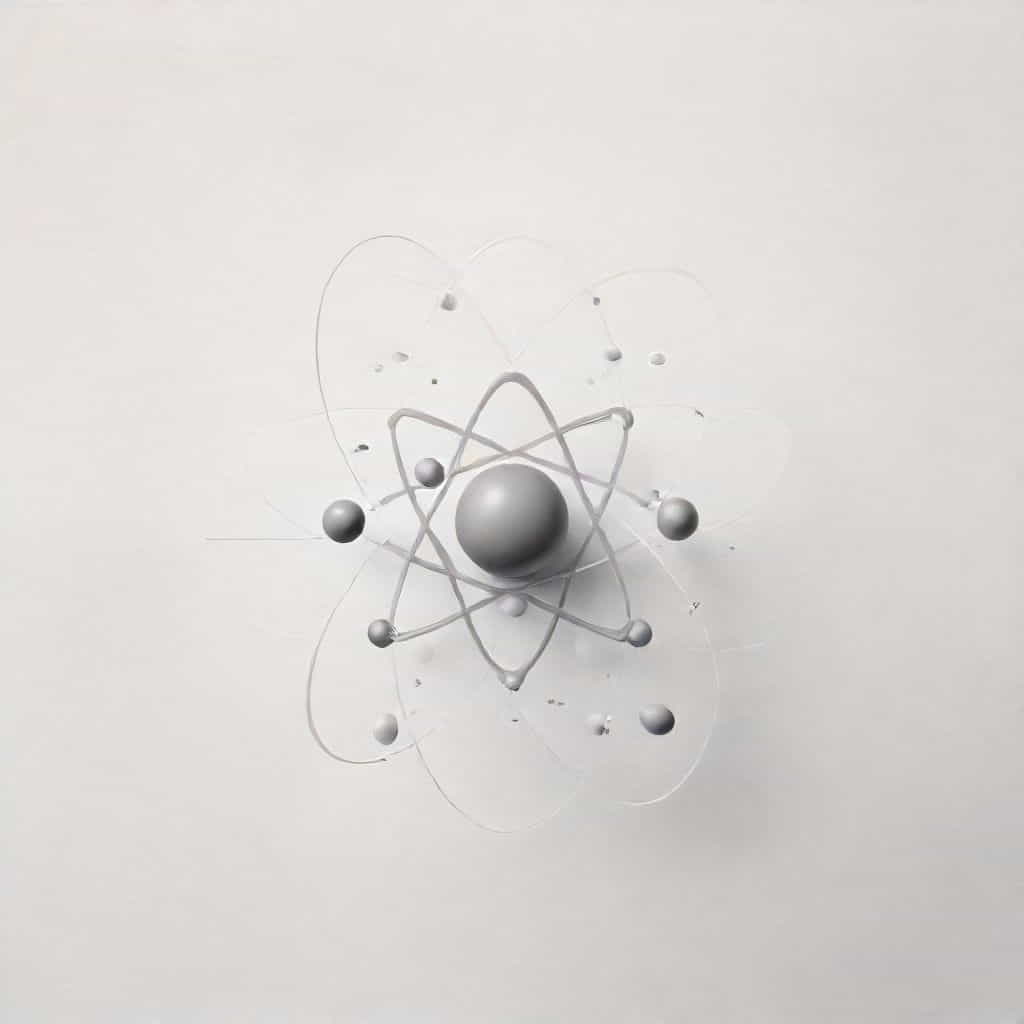
General Arrangement of Subatomic Ptopics in an Atom Structure and SignificanceAtoms are the basic units of matter. Everything in the universe is made up of atoms, from the air we breathe to the devices we use daily. Despite their small size, atoms have a complex internal structure composed of even smaller ptopics known as subatomic ptopics. Understanding the general arrangement of subatomic ptopics in an atom helps explain chemical behavior, bonding, and physical properties of elements.
What Are Subatomic Ptopics?
Subatomic ptopics are ptopics smaller than an atom. The three main subatomic ptopics are
-
Protons Positively charged ptopics
-
Neutrons Neutral ptopics with no charge
-
Electrons Negatively charged ptopics
Each of these ptopics plays a distinct role in the structure and behavior of atoms.
Basic Structure of an Atom
Atoms consist of two main regions
-
Nucleus
-
Electron Cloud or Shells
Let’s look at these two parts in more detail.
The Nucleus The Core of the Atom
At the center of the atom lies the nucleus, a dense region that contains protons and neutrons. These two ptopics are collectively known as nucleons.
Protons
-
Carry a positive charge (+1)
-
Determine the atomic number of an element
-
Responsible for the identity of the element
For example, hydrogen has one proton, so its atomic number is 1.
Neutrons
-
Have no charge
-
Add mass to the atom
-
Help stabilize the nucleus by reducing repulsive forces between protons
The number of neutrons can vary in atoms of the same element, creating isotopes.
Properties of the Nucleus
-
Very small compared to the overall size of the atom
-
Extremely dense
-
Contains almost all the mass of the atom
The Electron Cloud Surrounding the Nucleus
Surrounding the nucleus is the electron cloud, where electrons are located. These negatively charged ptopics move around the nucleus in regions known as shells or energy levels.
Electrons
-
Have a negative charge (−1)
-
Are much lighter than protons and neutrons
-
Responsible for chemical bonding
-
Determine the charge and reactivity of an atom
Electrons are arranged in energy levels around the nucleus, with each level holding a specific maximum number of electrons.
Electron Shells and Configuration
Electrons do not orbit the nucleus like planets around the sun. Instead, they exist in regions called orbitals, grouped into energy levels or shells. The arrangement of electrons in these shells is known as the electron configuration.
Energy Levels
-
The first shell (closest to the nucleus) holds up to 2 electrons.
-
The second shell can hold up to 8 electrons.
-
The third shell can hold up to 18 electrons, and so on.
Atoms tend to be most stable when their outermost shell is full. This is the basis for the octet rule in chemistry.
Subatomic Ptopic Masses and Charges
| Ptopic | Charge | Relative Mass | Location |
|---|---|---|---|
| Proton | +1 | 1 | In the nucleus |
| Neutron | 0 (neutral) | 1 | In the nucleus |
| Electron | -1 | ~1/1836 | Electron cloud |
Although electrons are much lighter, they play a crucial role in forming chemical bonds and conducting electricity.
Interaction Between Subatomic Ptopics
The stability and structure of an atom depend on the interactions among its subatomic ptopics
-
Electrostatic Attraction Opposite charges attract, so electrons are held near the positively charged nucleus.
-
Strong Nuclear Force Protons repel each other due to their positive charge, but the strong nuclear force binds protons and neutrons together in the nucleus.
-
Electron Repulsion Electrons repel each other, and this helps define their spatial distribution around the nucleus.
These interactions maintain the atom’s stability and shape.
Isotopes and Atomic Mass
Atoms of the same element can have different numbers of neutrons. These are called isotopes. While the number of protons (and electrons in a neutral atom) remains constant, variations in neutrons affect the atom’s mass number.
For example
-
Carbon-12 has 6 protons and 6 neutrons.
-
Carbon-14 has 6 protons and 8 neutrons.
Isotopes are crucial in fields like radiocarbon dating and nuclear medicine.
Ions and Charge Imbalance
If an atom gains or loses electrons, it becomes an ion
-
Losing electrons = positive ion (cation)
-
Gaining electrons = negative ion (anion)
Ions play a key role in electrical conductivity, electrolysis, and cellular functions in biology.
Modern Atomic Models
Over time, atomic models have evolved
-
Dalton’s Model Atoms as indivisible spheres.
-
Thomson’s Model Electrons embedded in a positive sphere (plum pudding model).
-
Rutherford’s Model Dense nucleus with electrons orbiting it.
-
Bohr’s Model Electrons in fixed energy levels.
-
Quantum Mechanical Model Electrons exist in probabilistic orbitals rather than fixed paths.
Today, the quantum model is the most accurate, incorporating complex mathematics to predict electron behavior.
Importance of Understanding Subatomic Structure
Knowing the general arrangement of subatomic ptopics helps in understanding
-
Chemical bonding
-
Electricity and magnetism
-
Nuclear reactions
-
Properties of elements
-
Biological processes at the molecular level
It forms the foundation of both chemistry and physics.
The general arrangement of subatomic ptopics in an atom reveals a world of complexity within the smallest units of matter. The nucleus, packed with protons and neutrons, provides mass and stability. Electrons, arranged in shells, govern chemical behavior and bonding. This intricate structure forms the backbone of all material substances, from stars to cells. Grasping this arrangement allows us to explore and manipulate the physical world at its most fundamental level.