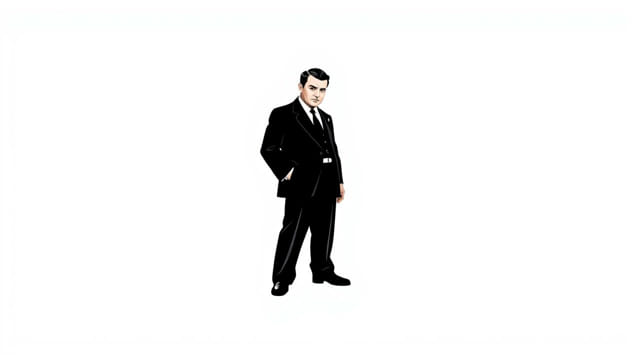
Al Capone, often remembered as one of the most notorious gangsters in American history, was a man of both infamy and contradiction. He rose to power during the Prohibition era, cultivating a criminal empire that earned him the nickname Scarface. Behind the public image of a ruthless gangster, however, was a complex figure brash, unrefined, but surprisingly organized. To understand the full-scale Capone, we must look beyond the headlines and sensational stories and dive into the world he ruled and the man he truly was: an uncouth yet commanding presence in American criminal history.
The Rise of Al Capone
From Brooklyn Streets to Chicago Power
Alphonse Gabriel Capone was born in 1899 in Brooklyn, New York, to Italian immigrant parents. His early years were shaped by the rough neighborhoods of New York, where he quickly fell into petty crime. His associations with gangs like the Five Points Gang exposed him to the underworld lifestyle. It was during this time that he earned the Scarface nickname after a bar fight left him with a prominent facial scar.
Capone moved to Chicago in the early 1920s under the wing of Johnny Torrio, another mob figure. When Torrio was injured in an assassination attempt and subsequently retired, Capone took over. This marked the beginning of his transformation into a full-scale criminal operator, running brothels, gambling dens, and especially bootlegging operations during Prohibition.
The Business of Crime
Prohibition and Opportunity
The 18th Amendment, which prohibited the manufacture and sale of alcohol, opened the door to vast underground markets. Capone exploited this fully, establishing a powerful and violent bootlegging network. His control extended through Chicago and even influenced law enforcement and political figures. By the mid-1920s, Capone was making an estimated $100 million annually from illegal operations.
- Bootlegging and alcohol smuggling
- Gambling and casinos
- Prostitution rings
- Protection rackets
Capone may have lacked polish and sophistication, but his street-smarts, fearlessness, and strategic mind enabled him to build a criminal empire with astonishing speed. Though uncouth in manner, he was calculating when it came to business, understanding the balance between bribery and brute force.
The Public Image vs. Private Reality
The Charitable Gangster
Despite being a criminal overlord, Capone knew the value of public perception. He donated to charities, opened soup kitchens, and presented himself as a benefactor to Chicago’s poor. During the Great Depression, he offered meals to thousands of unemployed workers, gaining a strange sense of loyalty among certain communities.
However, this image often masked the cruelty and violence of his rule. Capone ruled with fear, using assassinations and beatings to silence rivals and dissenters. One of the most infamous examples was the St. Valentine’s Day Massacre in 1929, where seven men associated with rival Bugs Moran were lined up and shot execution-style by men dressed as police officers.
The Uncouth Personality of Capone
Rough Edges, Violent Temper
Capone was not a refined man. He was known for his rough speech, brash behavior, and lavish yet gaudy lifestyle. He wore flashy suits, smoked expensive cigars, and drove customized bulletproof cars. He enjoyed public attention, frequently appearing in the media despite the risk of exposure.
His uncouth nature extended to his temper. He was volatile and known to lose control quickly. Employees and rivals alike feared his wrath, which could be triggered by betrayal or mere disrespect. He lived in a world where brutality was currency, and Capone did not hesitate to spend it liberally.
Conflict with Law Enforcement
Tax Evasion and Downfall
Though law enforcement struggled to convict Capone on charges of murder or racketeering, he was ultimately brought down by the less glamorous route of tax evasion. In 1931, after years of careful investigation, the government managed to convict him for failing to report and pay taxes on his illicit income.
This legal tactic, used by agents like Eliot Ness and others from the Treasury Department, succeeded where traditional policing had failed. Capone was sentenced to 11 years in prison and fined heavily. His health deteriorated rapidly in prison, especially after being diagnosed with syphilis. By the time he was released in 1939, he was mentally and physically diminished.
The Legacy of Full-Scale Capone
From Infamy to Icon
Al Capone remains an icon of American crime. His name is synonymous with gangster culture and Prohibition-era lawlessness. Films, books, and documentaries have all tried to capture the full scale of his persona. Despite his uncouth behavior and criminal background, there remains a peculiar fascination with the man behind the machine.
His story serves as a cautionary tale about unchecked ambition, the dangers of corruption, and the allure of outlaw fame. Capone’s empire was built on violence and greed, but it was also enabled by a society willing to turn a blind eye in exchange for money and influence.
Al Capone, the full-scale mobster and uncouth man, represents a complex chapter in American history. He was brutal yet charitable, crude yet strategic, a man of contradictions wrapped in tailored suits and trailed by violence. His rise and fall illustrate the thin line between power and ruin, especially when that power is rooted in illegality. Though decades have passed, the name Capone still resonates a symbol of an era defined by ambition, corruption, and the dark allure of the criminal underworld.