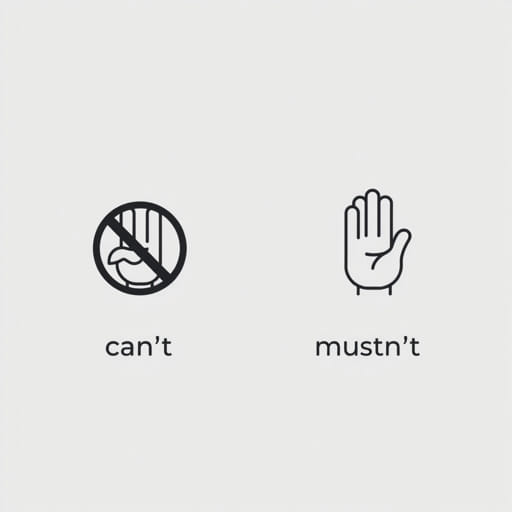
Understanding the difference between can’t and mustn’t is essential for mastering English modal verbs. These words may seem similar because both express negative meanings, but they are used in very different contexts. Misusing one for the other can lead to confusion or unintended meaning. While can’t generally indicates a lack of ability or permission, mustn’t is used to express prohibition or strong advice against doing something. Learning how and when to use each can improve both spoken and written English significantly.
Understanding Modal Verbs in English
Modal verbs like can, must, should, and may are auxiliary verbs used to express possibility, necessity, ability, permission, or obligation. They are followed by the base form of a verb and do not take -s in the third person. Both can’t and mustn’t are negative forms of modal verbs can and must, respectively. They play critical roles in structuring sentences that convey rules, restrictions, or limitations.
The Meaning of Can’t
Can’t is a contraction of cannot, which indicates that something is not possible or not allowed. It is commonly used in two contexts:
1. Lack of Ability
When can’t expresses inability, it refers to a person’s lack of skill or physical capacity to do something.
- I can’t swim. (I don’t know how to swim.)
- He can’t lift the box. (It is too heavy for him.)
2. Lack of Permission
Can’t can also indicate that someone is not allowed to do something, either because of rules or social norms.
- You can’t park here. (It’s against the rules.)
- They can’t enter the building without an ID. (Security protocol forbids it.)
In both cases, can’t communicates a restriction, either internal (lack of ability) or external (rules or laws).
The Meaning of Mustn’t
Mustn’t is the contraction of must not. It is a strong form of prohibition. When someone says you mustn’t do something, they are not simply suggesting that it’s not allowed they are warning against it. The tone is more forceful than can’t.
Used for Rules and Warnings
Mustn’t is typically used when there are serious consequences for an action or when something is morally or legally forbidden.
- You mustn’t drink and drive. (It’s illegal and dangerous.)
- Children mustn’t play with matches. (It’s unsafe.)
- We mustn’t reveal confidential information. (It’s against policy.)
Here, mustn’t implies a high level of obligation not to do something. It’s often used when the speaker wants to strongly advise or command someone to avoid a particular action.
Key Differences Between Can’t and Mustn’t
Though both words involve restriction, the type and degree of restriction they express differ significantly. Understanding these nuances is key to choosing the correct term.
1. Type of Restriction
- Can’t: Used for expressing physical or legal inability, or lack of permission.
- Mustn’t: Used for strong rules or moral/ethical prohibition.
2. Degree of Force
- Can’t: Often neutral or factual. It states what is not possible or allowed.
- Mustn’t: Strong and forceful. It warns or forbids with emphasis.
3. Usage Contexts
- Can’t: Appropriate in both informal and formal situations to explain limitations.
- Mustn’t: Commonly used in rules, instructions, and formal guidance where safety or ethics are involved.
Examples in Comparison
To clearly see the distinction, compare these sentences:
- Youcan’tuse your phone in the cinema. (Policy or rule use is not allowed.)
- Youmustn’tuse your phone during the flight. (Stricter rule strong warning due to safety concerns.)
- Ican’tspeak Chinese. (I do not have the ability.)
- Youmustn’tlie to the court. (Legal or ethical obligation serious consequences.)
These examples demonstrate how one expresses an external or internal inability while the other communicates prohibition or obligation.
Common Mistakes and Misunderstandings
English learners sometimes confuse can’t and mustn’t because both convey negativity. However, substituting one for the other can change the meaning entirely.
For example:
- Incorrect: Youcan’tlie to the police. (Sounds like you are physically unable to lie.)
- Correct: Youmustn’tlie to the police. (You are prohibited from doing so.)
Such mistakes can lead to misunderstandings, especially in professional or legal settings.
How to Practice Using Can’t and Mustn’t
To improve your use of these modal verbs, try the following methods:
- Write sentences: Practice writing examples for different contexts ability, rules, warnings.
- Listen actively: Watch movies, news, or lectures to hear how native speakers use them.
- Take quizzes: Online exercises focusing on modal verbs can help solidify the differences.
Why This Distinction Matters
In English communication, especially in formal, legal, or academic settings, using the correct modal verb is crucial. Saying someone can’t do something when you mean they mustn’t can weaken the intended prohibition. Conversely, saying mustn’t when only ability is meant might sound overly strict or confusing. This distinction helps ensure clarity and precision in communication.
In summary, the difference between can’t and mustn’t lies in their meaning and application. Can’t is used to express inability or lack of permission, while mustn’t indicates strong prohibition or moral/legal restriction. Understanding and applying them correctly improves clarity, enhances fluency, and prevents miscommunication. Whether you are learning English or refining your skills, recognizing this difference is a powerful step toward more effective language use.