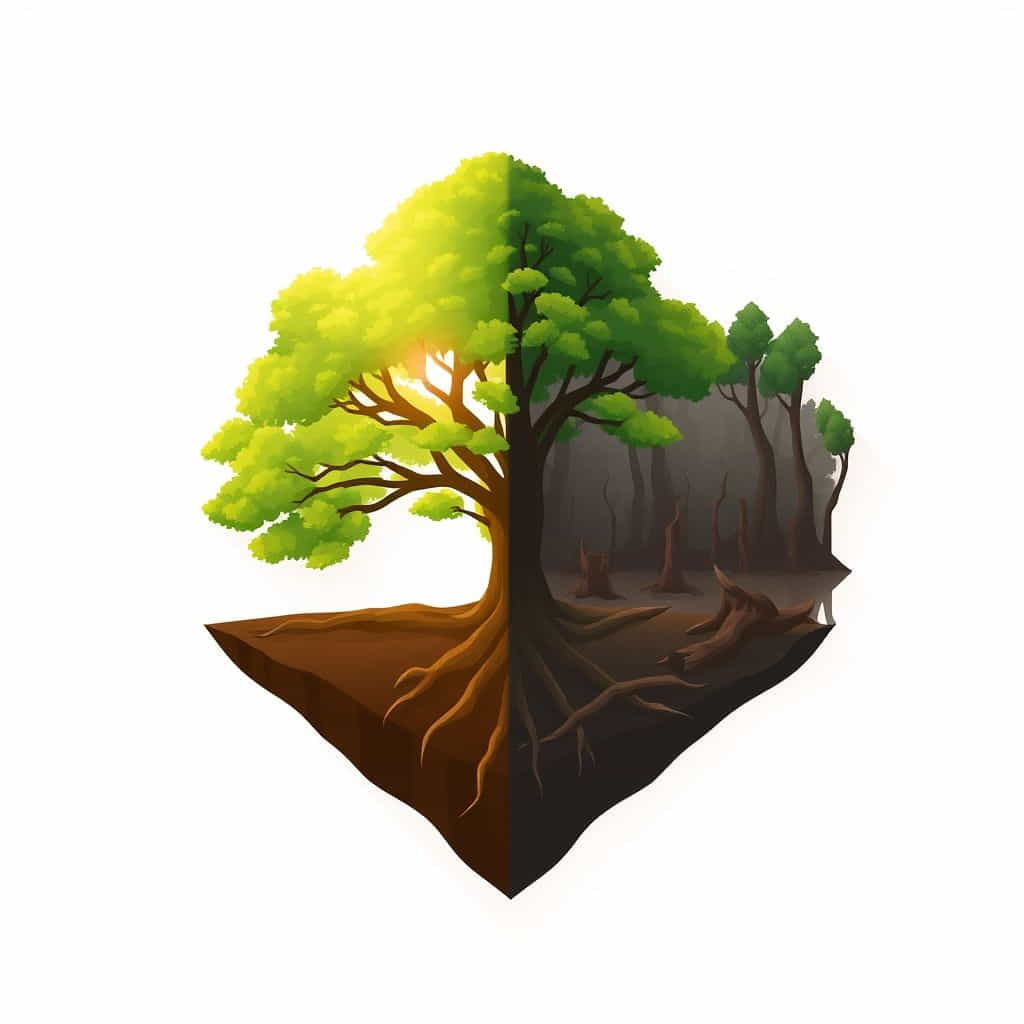
Difference Between Afforestation and Deforestation Understanding the Environmental ImpactAfforestation and deforestation are two terms often used in discussions about environmental sustainability, but they represent opposite processes. While both affect forests and ecosystems in significant ways, they have distinct implications for the environment. In this topic, we will explore the key differences between afforestation and deforestation, their environmental impacts, and why it is crucial to understand these processes in the context of global efforts to combat climate change.
What is Afforestation?
Afforestation refers to the process of planting trees in an area where there was no previous forest cover. This is typically done on land that has been barren, agricultural, or used for other purposes but has not previously had a natural forest ecosystem. The primary goal of afforestation is to create new forested areas that can provide various ecological, environmental, and economic benefits.
Key Benefits of Afforestation
-
Carbon Sequestration Newly planted forests absorb carbon dioxide from the atmosphere, which helps mitigate climate change by reducing greenhouse gases.
-
Soil Conservation Planting trees helps prevent soil erosion by stabilizing the soil with root systems.
-
Biodiversity Enhancement Afforestation can help restore habitats for various plant and animal species, thus promoting biodiversity.
-
Water Regulation Trees help in managing water cycles, reducing runoff, and improving groundwater recharge.
Afforestation is considered a positive environmental action because it helps in reversing some of the damage caused by deforestation and contributes to the regeneration of ecosystems.
What is Deforestation?
Deforestation, on the other hand, is the process of clearing or removing forests to make way for other land uses, such as agriculture, urban development, or logging. It involves the destruction of forest ecosystems, often resulting in the loss of biodiversity and environmental degradation.
Key Consequences of Deforestation
-
Loss of Biodiversity When forests are cleared, many plant and animal species lose their habitats, leading to a decline in biodiversity.
-
Climate Change Deforestation contributes significantly to global warming by releasing stored carbon in trees and soil into the atmosphere.
-
Soil Erosion Without trees to anchor the soil, deforestation increases the risk of soil erosion, which can degrade the land and reduce its fertility.
-
Disruption of Water Cycles Forests play a crucial role in maintaining local water cycles. Their removal can lead to reduced rainfall and more extreme weather patterns.
Deforestation is widely regarded as one of the leading causes of environmental degradation and a significant driver of climate change.
Key Differences Between Afforestation and Deforestation
While afforestation and deforestation are related to forests, they differ in their actions and outcomes. Below are the key differences
1. Purpose
-
Afforestation The primary aim of afforestation is to create new forested areas where none existed before, typically to improve the environment, restore ecosystems, and combat climate change.
-
Deforestation Deforestation is generally done to make land available for agriculture, urbanization, or industrialization, often driven by human development needs.
2. Environmental Impact
-
Afforestation Afforestation is beneficial to the environment as it helps increase forest cover, enhances biodiversity, and absorbs carbon dioxide.
-
Deforestation Deforestation has a negative impact on the environment, contributing to habitat destruction, loss of biodiversity, and increased greenhouse gas emissions.
3. Role in Climate Change
-
Afforestation Afforestation helps mitigate climate change by acting as a carbon sink, absorbing carbon dioxide from the atmosphere.
-
Deforestation Deforestation accelerates climate change by releasing carbon stored in trees and soil into the atmosphere, contributing to global warming.
4. Soil and Water Conservation
-
Afforestation Trees planted during afforestation help reduce soil erosion, improve water retention, and restore water cycles.
-
Deforestation The removal of trees during deforestation increases soil erosion and disrupts water cycles, leading to problems such as flooding and reduced agricultural productivity.
5. Biodiversity
-
Afforestation When managed properly, afforestation can create new habitats for wildlife and increase biodiversity by introducing new plant species.
-
Deforestation Deforestation results in the destruction of habitats, leading to the loss of biodiversity and endangerment of species.
Why is Afforestation Important?
Afforestation is a vital strategy in the fight against climate change and environmental degradation. As global temperatures rise and ecosystems are threatened by human activities, afforestation provides a natural solution to some of the world’s most pressing challenges. In addition to combating climate change, afforestation helps in improving air quality, supporting agriculture, and providing resources for local communities.
Global Efforts and Initiatives
Countries around the world are engaging in large-scale afforestation projects to restore degraded lands, combat desertification, and reduce their carbon footprint. Some notable examples of afforestation initiatives include the Green Great Wall in China and the Green Belt Movement in Kenya. These efforts demonstrate the significant potential of afforestation to improve the environment on a global scale.
Why is Deforestation a Concern?
Deforestation is one of the most pressing environmental issues of our time. It contributes to the loss of biodiversity, exacerbates climate change, and disrupts the lives of millions of people who depend on forests for their livelihoods. The destruction of forests also affects local and global weather patterns, making it more difficult to address issues such as water scarcity and food security.
Driving Factors of Deforestation
-
Agricultural Expansion The demand for land to grow crops, such as palm oil, soybeans, and cocoa, often leads to large-scale deforestation, particularly in tropical regions.
-
Urbanization Rapid urban growth and infrastructure development also contribute to deforestation as forests are cleared for cities, roads, and other construction projects.
-
Logging The logging industry often clears large areas of forest to meet the demand for timber and other wood products.
Efforts to reduce deforestation involve improving land management practices, enforcing laws to prevent illegal logging, and promoting sustainable farming and forestry practices.
Conclusion
In summary, afforestation and deforestation represent two opposing forces in the fight for environmental sustainability. While afforestation helps in the restoration of ecosystems, the prevention of soil erosion, and the reduction of carbon emissions, deforestation accelerates environmental degradation, harms biodiversity, and contributes to climate change. Understanding the key differences between these two processes is crucial for individuals, communities, and policymakers working toward a more sustainable future. By promoting afforestation and minimizing deforestation, we can protect our planet’s valuable resources and ensure a healthier environment for future generations.