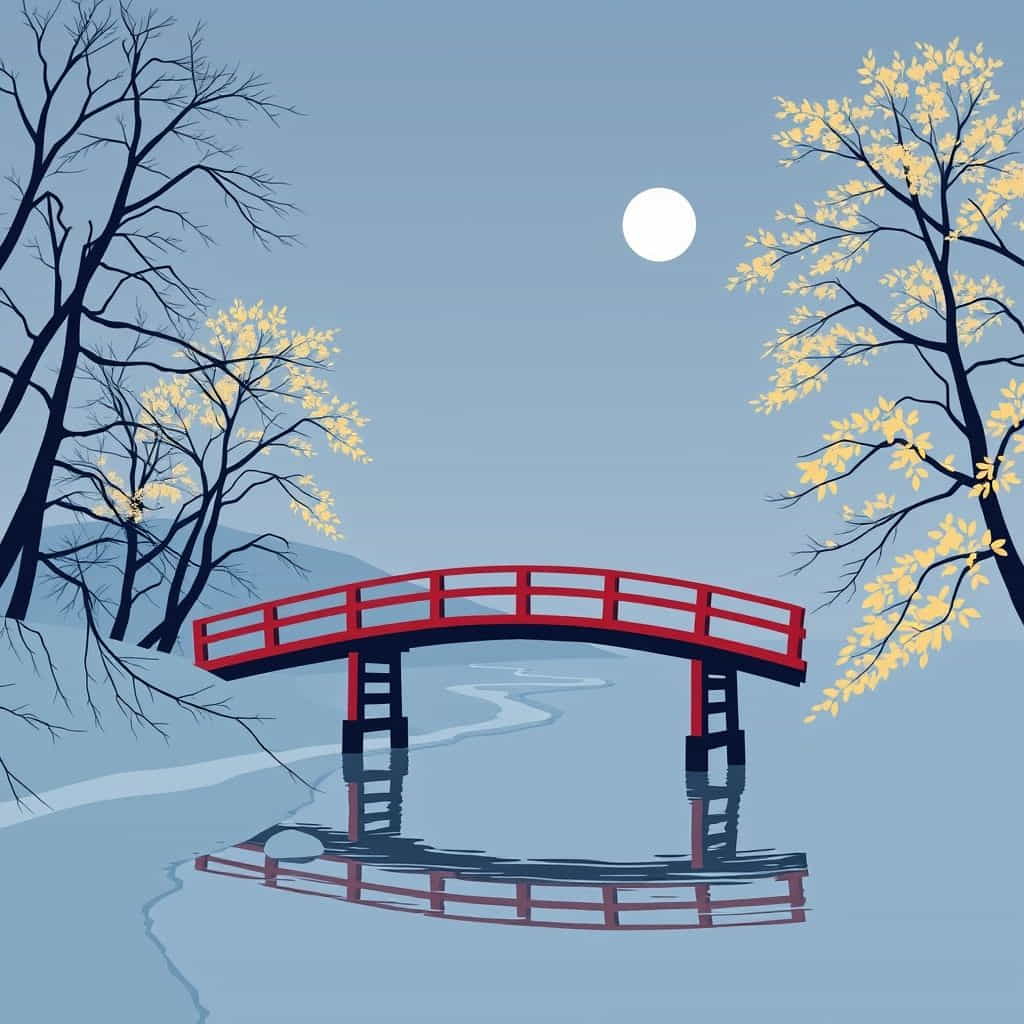
Claude Monet and the Japanese Footbridge A Masterpiece of Impressionist ArtClaude Monet, the founder of the French Impressionist movement, is best known for his breathtaking depictions of light, nature, and fleeting moments. Among his many iconic subjects, the Japanese footbridge in his garden at Giverny stands out as a recurring and deeply personal motif. This elegant bridge, arching over a water lily pond, became one of Monet’s most beloved themes, representing both artistic exploration and inner reflection.
The Significance of the Japanese Footbridge in Monet’s Work
The Japanese footbridge was more than just a physical structure in Monet’s garden it was a focal point of inspiration. Monet painted the footbridge dozens of times under different light and seasonal conditions. The bridge became symbolic of his passion for harmony between man-made structures and the natural world.
Monet’s dedication to this subject shows his evolving style and his commitment to capturing the essence of nature through changing light, atmosphere, and color.
Monet’s Garden at Giverny A Living Canvas
In 1883, Claude Monet settled in the village of Giverny, located in northern France. He purchased a house with a large piece of land, which he transformed into a lush garden. Over time, Monet expanded his garden to include a water lily pond inspired by Japanese aesthetics. He even imported exotic plants and constructed a curved wooden bridge to resemble those found in Japanese prints.
This bridge and pond soon became central themes in his later paintings. Monet cultivated the garden not just for pleasure, but also as a living subject for his art. He often referred to the garden as his most beautiful masterpiece.
Influence of Japanese Art on Monet
During the late 19th century, Japanese art gained popularity in Europe. Artists like Monet were deeply influenced by Japanese woodblock prints, especially those by artists such as Hokusai and Hiroshige. This influence, known as Japonisme, introduced new ways of seeing space, composition, and color.
Monet admired the simplicity, elegance, and balance found in Japanese prints. The Japanese footbridge in his garden was a direct tribute to this cultural influence. In his paintings, Monet combined Impressionist techniques with the serene aesthetic principles of Japanese design.
The Water Lily Series and the Footbridge
The Water Lily series is perhaps Monet’s most famous body of work, and many of these paintings include the Japanese footbridge. The series captures the surface of the pond, floating lilies, reflections of trees, and the gentle curve of the bridge. The interplay of water, light, and reflection created a dreamlike quality that defines Impressionism.
Among the notable paintings in this series are
-
The Japanese Bridge (1899) This painting is one of the earliest depictions, showcasing the bridge bathed in soft light and surrounded by lush greenery.
-
Water Lily Pond (1900) A more vibrant and colorful composition with clearer outlines.
-
The Japanese Bridge (1923-25) A later work where Monet’s eyesight had deteriorated, resulting in bolder brushstrokes and abstract forms.
Each version of the footbridge tells a different story, reflecting the changes in Monet’s mood, health, and vision over the years.
Evolution of Monet’s Painting Style
Over time, Monet’s depiction of the footbridge evolved. His early works show more detail and clarity, while his later paintings became more abstract. This change was partly due to cataracts that affected his vision in his later years, causing him to see the world in yellow and red tones.
Rather than abandoning painting, Monet adapted his style. His brushstrokes grew looser, and his colors became more expressive. The Japanese bridge became a mirror of his emotional and physical transformation. These later works, though less realistic, are admired for their intensity and raw emotion.
Emotional Depth and Symbolism
For Monet, the Japanese footbridge was not just a picturesque scene it was a symbol of peace, introspection, and the passage of time. It represented a bridge between East and West, between man and nature, and between vision and memory. The recurring appearance of the bridge in his paintings suggests a meditative journey, as though Monet was repeatedly returning to the same moment to find new meaning.
This emotional connection is what makes these paintings resonate with viewers even today. The footbridge invites contemplation, inviting us to pause and observe the quiet beauty of the world around us.
Where to See Monet’s Japanese Footbridge Paintings
Several of Monet’s footbridge paintings are displayed in major museums around the world. Institutions such as the Musée d’Orsay in Paris, the National Gallery in London, and the Metropolitan Museum of Art in New York hold some of these masterpieces.
Additionally, visitors to Giverny can still walk through Monet’s garden and see the actual Japanese bridge he painted. The garden has been carefully restored to resemble how it looked during Monet’s lifetime, offering a powerful and immersive experience.
Legacy of the Japanese Footbridge
The Japanese footbridge has become one of the most recognizable elements in Monet’s body of work. It has influenced generations of artists and continues to captivate art lovers. The bridge stands as a lasting symbol of Monet’s artistic vision, his deep connection to nature, and his ability to transform everyday scenes into timeless works of beauty.
Monet’s focus on the same subject over time also teaches us an important lesson about perspective how something familiar can reveal new insights when viewed through a different lens, light, or state of mind.
Claude Monet’s paintings of the Japanese footbridge are more than just beautiful artworks. They are windows into the heart of an artist who saw the world through color, light, and emotion. His connection to the garden at Giverny and his fascination with Japanese aesthetics gave birth to a series of paintings that continue to inspire and enchant.
By studying the Japanese footbridge, we gain a deeper understanding of Monet’s journey as an artist and his legacy as a pioneer of Impressionism. His work reminds us to look closely, to appreciate the details, and to find beauty in the natural world that surrounds us.