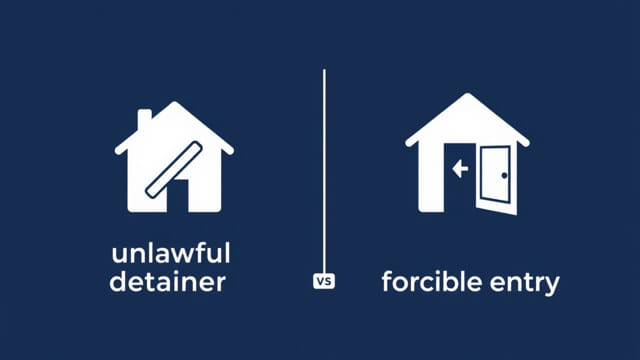
In the realm of property law, disputes often arise when possession or occupancy of real estate is questioned or challenged. Two terms that frequently emerge in such legal conflicts are ‘unlawful detainer’ and ‘forcible entry.’ Although they may seem similar at first glance, they refer to different circumstances and legal remedies. Understanding the key differences between unlawful detainer and forcible entry is crucial for both landlords and tenants, as well as property owners and occupants, to ensure proper legal action is taken when possession of real property is unlawfully withheld or obtained.
Understanding Unlawful Detainer
Unlawful detainer refers to a situation where a person, typically a tenant, continues to occupy a property without legal right after their lease or rental agreement has expired or been terminated. This legal term is commonly used in eviction proceedings initiated by landlords who seek to recover possession of their property from tenants who refuse to vacate.
Key Elements of Unlawful Detainer
- The individual had lawful possession initially, usually under a rental or lease agreement.
- The lawful right to occupy has been terminated or expired.
- A notice to vacate was provided as required by law.
- The occupant failed to leave the premises voluntarily after the notice period.
Unlawful detainer actions are civil cases, and landlords must follow strict procedural rules when filing them. The goal is not to address ownership disputes but rather to regain rightful possession of the property.
Legal Process of Unlawful Detainer
The legal process typically begins with a written notice, such as a ‘3-day notice to quit’ or ’30-day notice to vacate,’ depending on the jurisdiction and reason for termination. If the tenant does not comply, the landlord may file an unlawful detainer lawsuit in court. If successful, the court issues a judgment for possession, which can be enforced by a sheriff or other authorized officer.
Explaining Forcible Entry
Forcible entry involves the act of entering and taking possession of real property through force, threats, intimidation, or without the consent of the lawful possessor. Unlike unlawful detainer, which begins with lawful possession, forcible entry arises when someone takes possession unlawfully from the start.
Key Characteristics of Forcible Entry
- Involves entry into a property without legal authorization.
- May include the use of actual force, threats, or stealth.
- The rightful possessor is unlawfully displaced or prevented from accessing the property.
- Often criminal in nature, though civil remedies also exist.
Forcible entry statutes are designed to protect peaceable possession, regardless of the occupant’s ownership status. In many jurisdictions, an individual who is wrongfully removed from property has the right to regain possession through a summary proceeding, even against someone with a better title, if the entry was unlawful.
Legal Remedies for Forcible Entry
Victims of forcible entry may file a forcible entry and detainer action. Courts typically prioritize the restoration of peaceful possession rather than adjudicating title or ownership disputes. In some cases, criminal charges may also be brought against the intruder, depending on the severity and nature of the entry.
Main Differences Between Unlawful Detainer and Forcible Entry
While both unlawful detainer and forcible entry concern the right to possess property, they differ significantly in terms of origin and legal implications.
Possession Status
- Unlawful Detainer: Begins with lawful possession that later becomes unlawful.
- Forcible Entry: Involves illegal acquisition of possession from the beginning.
Legal Focus
- Unlawful Detainer: Focuses on regaining possession after lawful tenancy ends.
- Forcible Entry: Focuses on restoring possession to someone wrongfully displaced.
Procedural Differences
- Unlawful Detainer: Requires notice to vacate and adherence to specific legal timelines.
- Forcible Entry: May involve immediate legal action without notice due to the violent or deceptive nature of the entry.
Examples in Practice
To better illustrate the distinction, consider the following scenarios:
Unlawful Detainer Example
A tenant signs a one-year lease. At the end of the lease, the landlord decides not to renew and gives a 30-day notice to vacate. The tenant refuses to leave. The landlord files an unlawful detainer action to evict the tenant.
Forcible Entry Example
A person breaks the lock and enters a vacant apartment, claiming it was abandoned. The previous lawful occupant returns to find the intruder inside. This is a clear case of forcible entry, and the rightful possessor can take legal action to recover possession.
Impact on Property Owners and Occupants
For property owners, both unlawful detainer and forcible entry situations pose significant legal and financial challenges. Tenants or occupants may delay rightful recovery of the premises, causing loss of rental income or property damage. For tenants, it is important to understand their rights and avoid actions that could lead to an unlawful detainer lawsuit or criminal charges related to forcible entry.
Landlord Considerations
- Ensure proper notice is given before initiating an unlawful detainer action.
- Do not attempt self-help evictions, as they may be deemed forcible entries.
- Document all interactions and lease violations carefully.
Tenant and Occupant Considerations
- Understand lease terms and abide by them.
- Vacate the premises when legally required to do so.
- Do not occupy a property without clear legal right or authorization.
Unlawful detainer and forcible entry are distinct legal concepts that address different types of property possession disputes. While both aim to resolve wrongful occupation or entry, their origins and remedies vary. Unlawful detainer deals with holdover occupants who once had lawful possession, whereas forcible entry involves initial unlawful possession through force or fraud. Understanding these differences is essential for navigating landlord-tenant conflicts, protecting property rights, and ensuring compliance with legal procedures. Whether you are a property owner, tenant, or legal professional, recognizing the nuances of these terms will help you respond appropriately in any property dispute.