The fortifications at Yorktown played a pivotal role in the final major battle of the American Revolutionary War, serving as the last stronghold of British defense against the combined American and French forces. These defensive earthworks and redoubts were not built overnight, nor without careful planning. The British fortification at Yorktown was overseen by military leadership with both engineering expertise and strategic insight. Understanding who directed the construction of these fortifications provides greater depth to the story of Yorktown and highlights the military figures whose decisions shaped the course of history during this critical moment.
British Command at Yorktown
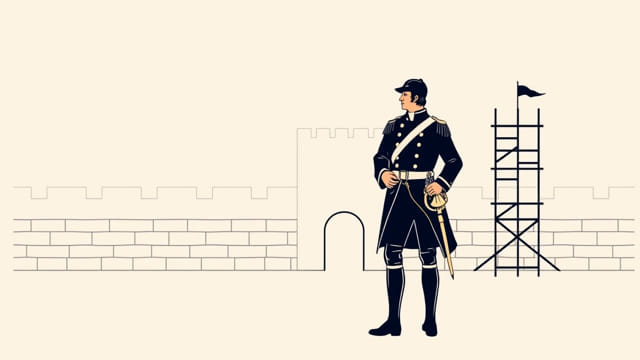
The primary British officer responsible for overseeing the construction of the fortifications at Yorktown was General Charles Cornwallis. As the commander of British forces in the southern theater, Cornwallis made the decision to establish a fortified position at Yorktown, Virginia, in the summer of 1781. His aim was to secure a deep-water port for resupply and reinforcement by the British Navy, while maintaining a strong defensive position inland.
Although General Cornwallis was not an engineer by profession, he directed his officers and engineers to construct a series of earthworks, redoubts, and defensive lines that would enable the British to withstand a siege. The responsibility for the technical and logistical elements of the fortifications was delegated to professional engineers under his command, including officers trained in military engineering through the British army’s corps of engineers.
Structure and Design of the Fortifications
The fortifications at Yorktown were strategically designed to protect the British from land and naval attacks. The design included:
- Two main defensive lines surrounding the town of Yorktown
- Several outlying redoubts to prevent direct assaults
- Artillery placements facing both land and sea approaches
- Trenches and parapets constructed from earth, timber, and fascines
These defenses were meant to delay or discourage any attempt by American or French forces to storm the town. However, as the siege progressed, the very layout and incomplete nature of some of these fortifications would be exploited by the attacking forces.
The Role of British Engineers
While General Cornwallis provided the overall command, the intricate work of constructing redoubts and defensive trenches was handled by British engineers and support troops. Military engineers, often trained in the use of geometry, physics, and logistics, played a central role in drawing plans, estimating resources, and supervising construction crews composed of soldiers and enslaved laborers.
Captain James Moncrief, a notable engineer serving under Cornwallis, was likely involved in fortifying Yorktown. Moncrief had experience from earlier engagements, including in the defense of British outposts in the southern colonies. Although the exact documentation of his presence at Yorktown is limited, engineers like him were essential in transforming Cornwallis’s strategic decisions into tangible defenses.
Use of Local Geography
Yorktown’s position on the York River offered both advantages and vulnerabilities. The British selected the site for its port access, but the surrounding land, with its ravines and open approaches, gave besieging forces opportunities to set up siege lines and artillery positions. Cornwallis’s engineers sought to mitigate these threats by reinforcing weak points and constructing outer redoubts, but time and resource limitations affected the completeness of these works.
Opposition: French and American Siege Tactics
While Cornwallis and his engineers built defenses, the allied forces of General George Washington and French General Rochambeau developed a coordinated siege plan. Beginning in October 1781, American and French troops dug parallel trenches and used heavy artillery to bombard the British fortifications. The siege tactics were effective and took advantage of gaps in the British defenses.
Particularly significant were Redoubts 9 and 10, outer positions critical to the integrity of the British defensive line. These redoubts were stormed in daring nighttime assaults led by American and French forces, breaching the British defenses and accelerating Cornwallis’s decision to surrender.
Limitations Faced by British Command
Several challenges limited Cornwallis’s ability to fortify Yorktown effectively:
- Shortage of engineering personnel and labor
- Limited supplies and materials for construction
- Lack of time due to the rapid arrival of the French fleet
- Underestimation of allied coordination and firepower
Despite the strategic intent, the British fortifications were ultimately inadequate to resist the prolonged and well-coordinated siege that followed.
Legacy of the Fortification and the Siege
The construction of the British fortifications at Yorktown, under the supervision of General Cornwallis and his engineers, is remembered not just for its tactical failure but for its role in one of the most decisive battles in American history. The defeat at Yorktown marked the end of major military operations in the American Revolutionary War and led to the beginning of peace negotiations in Europe.
Modern visitors to the Yorktown Battlefield can still observe the remnants of these fortifications. The preserved earthworks serve as silent testimony to the labor and strategic thought that went into them, as well as the ultimate futility of British efforts to maintain control over the American colonies by force.
Cornwallis’s Role in History
In summary, the British fortification at Yorktown was overseen by General Charles Cornwallis, who relied on his military engineers to construct defenses that he hoped would ensure a stable British hold in Virginia. Though his position seemed strong on paper, the combined strength and coordination of American and French forces, along with gaps in the British defenses, led to a historic defeat. Cornwallis’s name is forever tied to Yorktown, not only for his role in building its fortifications but for surrendering them, effectively bringing the American Revolution to a close.