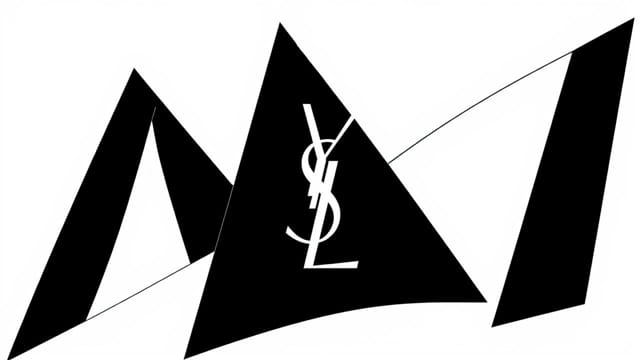
Yves Saint Laurent, the legendary French fashion designer, was known for many iconic contributions to haute couture, but perhaps one of his most daring and intellectually profound innovations was the incorporation of Cubism into fashion. Cubism, a revolutionary art movement pioneered by Pablo Picasso and Georges Braque in the early 20th century, emphasized abstract forms, multiple perspectives, and geometric shapes. When Saint Laurent channeled this complex artistic style into fashion, the results were bold, modern, and deeply influential. His fusion of art and design wasn’t just aesthetic it was conceptual, making a powerful statement about fashion as a legitimate art form and positioning himself as a visionary who refused to be constrained by traditional boundaries.
Understanding Cubism and Its Influence
What is Cubism?
Cubism was an avant-garde art movement that emerged around 1907 in Paris. It sought to break objects down into geometric shapes, often showing them from several angles at once. Instead of focusing on realistic portrayals, Cubist art focused on structure, form, and perspective. This artistic rebellion against classical techniques opened the door for modernism and had a wide influence on architecture, sculpture, and eventually, fashion.
Cubism in Broader Culture
Though primarily rooted in painting, Cubism impacted design, furniture, ceramics, and textiles. The abstraction and angularity associated with Cubism represented a break from the past and a movement toward intellectual freedom. By the time Yves Saint Laurent began his rise in the 1960s, Cubism had already become a cultural symbol of creativity and innovation. Saint Laurent’s genius was in finding ways to integrate these elements into wearable garments, making fashion a canvas for intellectual and artistic expression.
Yves Saint Laurent’s Artistic Vision
Art and Fashion as One
Yves Saint Laurent was never a designer who created only to dress. His collections reflected deep connections to visual arts, literature, and social movements. His iconic Mondrian dress from 1965, inspired by the Dutch painter Piet Mondrian, laid the groundwork for his later experiments with Cubism. He viewed clothing as a form of visual storytelling, not just an accessory of identity but a representation of culture and intellect. Cubism, with its abstraction and fragmented form, became a rich well from which he could draw ideas for prints, shapes, and color blocking.
How Cubism Entered the Runway
Saint Laurent’s flirtation with Cubism was evident in his use of strong lines, bold color contrasts, and asymmetrical silhouettes. His garments often featured geometric compositions that looked like they were lifted directly from a Picasso or Braque canvas. Dresses were crafted with patchworks of fabric in sharp rectangles or trapezoids, echoing the fractured planes of Cubist paintings. Even the structure of his garments changed coats and jackets were cut to suggest multiple angles, as though to mimic a face or figure viewed from different directions simultaneously.
Design Elements Inspired by Cubism
Color Blocking and Geometric Shapes
One of the most visible aspects of Cubism in Saint Laurent’s designs is color blocking. This technique uses solid blocks of contrasting color to create an abstract, painterly effect. These weren’t just decorative but were designed to change the way the eye sees the silhouette. He used colors to divide the body in non-traditional ways, much like Cubists divided objects into multi-perspective shapes.
- Contrasting primary colors reds, blues, yellows placed in angular forms
- Use of black lines to create boundaries between color blocks
- Placement of geometric patterns to distort or highlight the natural shape of the body
Structural Experimentation
Yves Saint Laurent didn’t stop at color. He explored structure in his Cubist-inspired collections. Dresses and jackets were sometimes sewn to appear off-kilter or to include unexpected angles, creating the illusion of fragmented perspective. These designs challenged the idea of balance and symmetry, core to traditional beauty, in favor of artistic innovation and visual intrigue.
The Cultural Impact of Cubism in Fashion
Elevating Fashion as Art
By incorporating Cubism, Saint Laurent didn’t just create beautiful clothes he elevated fashion into the realm of high art. Museums and galleries began to pay closer attention to runway shows. Critics and scholars saw the runway as a form of artistic performance. This transition helped to legitimize fashion as a serious cultural medium, capable of conveying ideas just as powerfully as a painting or sculpture.
Influencing Future Designers
Saint Laurent’s Cubist influences can still be seen in modern fashion. Designers like Issey Miyake, Comme des Garçons, and even recent collections from Prada and Balenciaga reflect the use of shape, color, and abstraction that Cubism popularized. Whether it’s in the form of oversized structural tailoring or garments that challenge the notion of symmetry and perspective, the echoes of Cubism live on.
Famous Collections That Reflect Cubist Influence
The Mondrian Collection
While technically more De Stijl than Cubist, the Mondrian dress laid the groundwork for geometric minimalism in Saint Laurent’s work. The technique of arranging colored rectangles with black outlines directly fed into later explorations of more fractured and angular designs.
The 1980s Power Shoulders and Shapes
In the 1980s, Saint Laurent’s exploration of sharp shoulders, bold color palettes, and rigid tailoring was arguably his most Cubist in structure. These pieces combined femininity with geometric masculinity, reflecting Cubism’s layered identities and shifting viewpoints.
The Enduring Legacy of Yves Saint Laurent’s Cubist Fashion
A Lasting Contribution to the Dialogue Between Art and Fashion
Yves Saint Laurent’s decision to integrate Cubism into fashion marked a turning point in the history of design. He dared to challenge the norms of beauty and silhouette by drawing inspiration from one of the most intellectually complex art movements of the 20th century. His work proved that fashion could go beyond trends, beyond functionality, and become a way of thinking a method for reshaping how people see not just clothes, but themselves and the world around them.
Modern Appreciation and Exhibition
Many museums and retrospectives on Yves Saint Laurent’s career highlight his Cubist influences as essential to his identity as a designer. Whether in a dress adorned with angular panels or in a jacket shaped like a fragmented sculpture, Saint Laurent’s Cubist-inspired pieces are still celebrated for their boldness and cultural relevance. His legacy is a reminder that fashion does not exist in a vacuum it is shaped by and shapes the art and ideas of its time.
In the grand tapestry of fashion history, Yves Saint Laurent’s integration of Cubism stands as a testament to creativity, innovation, and intellectual bravery. By translating artistic abstraction into the language of design, he opened a door for fashion to evolve not just as craft or commerce but as a true expression of art.