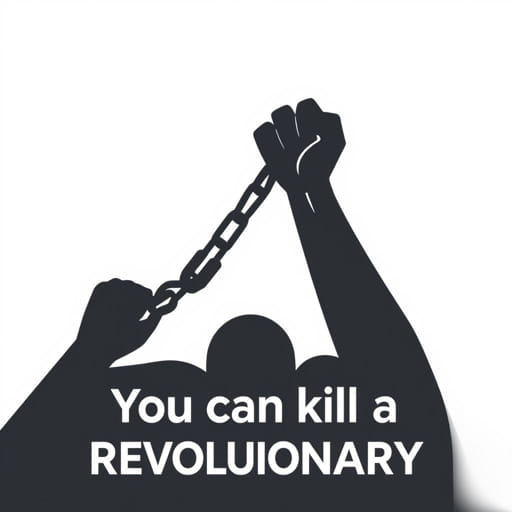
‘You can kill a revolutionary, but you can’t kill the revolution.’ This powerful phrase is often associated with the legacy of Fred Hampton, a charismatic leader of the Black Panther Party in Chicago who was assassinated in 1969. The quote symbolizes the resilience of revolutionary ideas and the enduring fight for justice, even in the face of state violence or systemic oppression. The concept resonates beyond Hampton’s story and serves as a universal truth that social and political change cannot be silenced simply by removing one leader. This topic explores the deeper meaning of the phrase, its historical context, and its relevance today in movements for equality and freedom.
The Historical Roots of the Quote
Fred Hampton and the Black Panther Party
Fred Hampton was a young, intelligent, and persuasive activist who rose quickly through the ranks of the Black Panther Party. By his early 20s, he had already made a profound impact in Chicago, organizing free breakfast programs, health clinics, and political education classes. Hampton’s belief in unity across racial lines led to the creation of the Rainbow Coalition, an alliance of various activist groups including the Young Lords and Young Patriots.
His growing influence, particularly among poor and working-class communities, made him a target of the FBI’s COINTELPRO (Counter Intelligence Program), which aimed to surveil and disrupt Black nationalist movements. On December 4, 1969, Hampton was shot and killed in a predawn raid conducted by the Chicago police and sanctioned by federal authorities. Despite his assassination, his ideals lived on.
The Power Behind the Words
The quote You can kill a revolutionary, but you can’t kill the revolution embodies a truth recognized in many movements around the world. While governments or institutions may succeed in silencing individuals who challenge the status quo, the ideas and injustices that gave rise to rebellion remain. It is this power of ideology and collective struggle that keeps revolutions alive long after their leaders are gone.
Revolution as an Ongoing Process
Ideology Survives Mortality
Revolutions are rarely the result of a single person’s effort. They are born out of widespread suffering, inequality, and the shared experiences of marginalized groups. The assassination of a revolutionary figure like Fred Hampton may temporarily slow momentum, but it often galvanizes supporters, deepening their commitment to the cause. History has shown time and again that when a revolutionary is killed, their martyrdom often amplifies their message rather than silencing it.
Examples in Global History
- Che Guevara– The Argentine Marxist revolutionary was executed in Bolivia in 1967. His image and ideology became iconic symbols of anti-imperialist resistance.
- Martin Luther King Jr.– His assassination in 1968 did not end the Civil Rights Movement but intensified calls for racial justice across America.
- Malcolm X– Killed in 1965, Malcolm’s radical critiques of systemic racism continue to influence Black consciousness today.
Modern Implications of the Quote
Continuing Social Movements
The statement remains deeply relevant in the 21st century. Movements like Black Lives Matter, climate justice, and indigenous rights have all experienced state pushback, censorship, or violence. Yet, the ideas at the core of these struggles continue to grow. The deaths of individuals whether by violence or systemic neglect often become rallying cries, drawing more attention and support.
Social media has become a new battleground for revolutionary voices. While authorities may try to shut down platforms or censor content, the decentralized nature of the internet allows revolutionary ideas to spread even faster than before.
Legacy in Arts and Culture
The phrase ‘You can kill a revolutionary, but you can’t kill the revolution’ has also been immortalized in music, film, and literature. It appears in documentaries, protest signs, and hip-hop lyrics. By embedding the phrase in cultural products, artists ensure that the message reaches new generations and remains part of the collective consciousness.
Psychological and Philosophical Dimensions
The Immortality of Ideas
The psychological power of the quote lies in its assertion that ideas are stronger than fear or death. This is a concept echoed in many philosophies and religions the belief that truth and justice transcend human lifespans. Revolutionary thinkers are often driven by a vision of the future that they know they may never personally see but believe is inevitable through collective struggle.
Motivation for Activists
For activists facing persecution, the quote provides courage and inspiration. Knowing that their sacrifice might not be in vain can help individuals continue to fight even in the darkest times. It reinforces the idea that while personal risk is real, the impact of their actions can outlast their physical presence.
Challenges to the Revolution
Co-optation and Dilution
One challenge facing revolutionary movements is the risk of being co-opted or watered down. While the death of a revolutionary may spark more action, it can also leave a vacuum in leadership. In some cases, movements can lose direction, be absorbed into mainstream politics, or be manipulated by opposing forces.
Need for Structure and Vision
For a revolution to survive beyond its founders, it must be built on a foundation of community, education, and clear objectives. The absence of such structure can lead to fragmentation or failure. The strength of a revolution lies not just in its passion, but also in its organization and sustainability.
An Enduring Truth
The phrase You can kill a revolutionary, but you can’t kill the revolution serves as a powerful reminder of the endurance of justice and the human spirit. Whether in the case of Fred Hampton or other revolutionary leaders throughout history, the impact of their work extends beyond their lifetime. Ideas, once ignited in the hearts and minds of the people, cannot be extinguished by violence alone. As long as there are people willing to stand up against injustice, the revolution lives on.
In a world still struggling with inequality, racism, and oppression, the words remain a guiding light for new generations of activists. Killing the revolutionary may remove a voice, but the echoes of that voice grow louder in the silence left behind. The revolution is not a moment it is a movement, one that endures because truth, justice, and freedom cannot be buried.