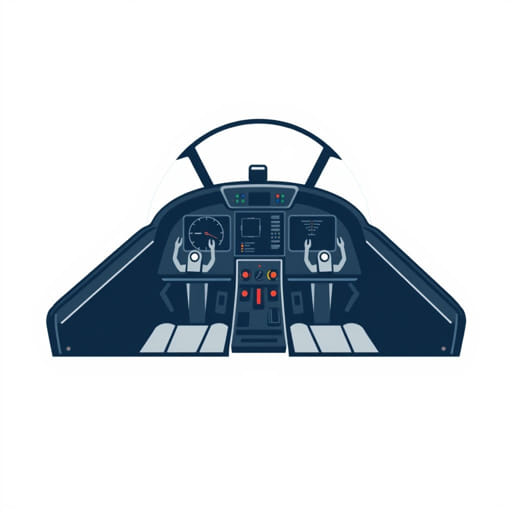
The Xian H-6 bomber, a Chinese strategic aircraft modeled after the Soviet-era Tupolev Tu-16, has undergone numerous modifications over the years. One of the most intriguing aspects of this long-serving platform is its cockpit layout and avionics suite, which have evolved with each variant. The cockpit of the Xian H-6 reflects the aircraft’s transition from an old-school analog bomber to a more advanced combat platform. As interest in the H-6 continues to grow, especially with newer versions such as the H-6K and H-6N, the design and function of the cockpit remain a critical area of focus for aviation enthusiasts, military analysts, and defense planners alike.
Overview of the Xian H-6 Aircraft
The Xian H-6 has served as the backbone of China’s strategic bombing capability for decades. Originally based on the Soviet Tu-16, the aircraft has been developed into several modern variants by Xian Aircraft Industrial Corporation. The H-6 is a twin-engine jet bomber, and while its basic airframe has remained relatively unchanged, the systems onboard including the cockpit have received major upgrades.
Evolution of the H-6 Cockpit
Early versions of the H-6 featured cockpits nearly identical to their Soviet counterparts. These cockpits were dominated by analog gauges, mechanical switches, and manual controls. The design was rugged and utilitarian, reflecting mid-20th-century aviation norms. However, as technology advanced and China’s aerospace capabilities improved, so too did the need to modernize the H-6 cockpit for enhanced situational awareness and mission flexibility.
Transition to Digital Avionics
The H-6K variant, introduced in the late 2000s, marked a major shift in cockpit technology. The transition from analog to digital instrumentation began in earnest, replacing older dials with multifunction displays (MFDs), digital readouts, and modern navigation systems. These changes not only improved efficiency but also allowed for better integration with advanced weapons systems and long-range precision munitions.
Cockpit Layout and Configuration
The H-6 bomber is operated by a multi-person crew, typically including a pilot, co-pilot, navigator, and weapons systems officer. Depending on the variant, the number of personnel in the cockpit and their respective tasks can vary slightly. Here’s a look at some key features of the cockpit layout:
- Pilot and Co-pilot Seats: Positioned side-by-side in the forward section of the cockpit with flight controls and primary flight instruments directly in front of them.
- Navigator/Weapons Officer: Often seated behind or to the side of the pilots, depending on the variant. Their role includes managing targeting systems and navigation.
- Digital Displays: In modern versions such as the H-6K, the cockpit is outfitted with multiple color MFDs that provide real-time flight data, mission planning info, and radar imagery.
- Heads-Up Display (HUD): Some upgraded models feature a HUD, enabling pilots to keep their eyes forward while accessing vital information like altitude, speed, and heading.
Ergonomics and Pilot Experience
Earlier models of the H-6 were often criticized for cramped working spaces and less-than-ideal ergonomics. The shift to digital systems has helped reduce clutter and improve comfort to some extent. In newer variants, touch screens and ergonomic control panels allow the crew to operate the aircraft more efficiently, especially during long-range missions.
Improved Visibility and Control
The pilot’s field of vision has also been enhanced in newer versions, thanks to revised canopy designs and better lighting systems. Night vision compatibility, clearer displays, and weather radar interfaces allow for improved performance under adverse conditions. These enhancements are particularly useful for the strategic missions the H-6 is now expected to carry out, including maritime strike and electronic warfare roles.
Differences Between H-6 Variants
Each new variant of the H-6 brings changes to the cockpit to support evolving mission requirements:
- H-6A/B: These early variants featured a largely analog cockpit based on the original Tu-16 design. Basic targeting and navigation instruments were present, but limited automation and no digital displays.
- H-6G: This version introduced more advanced avionics and was designed for electronic warfare and naval coordination. Some digital equipment was added.
- H-6K: A significant modernization effort brought glass cockpit displays, GPS-based navigation, and compatibility with modern air-to-surface cruise missiles.
- H-6N: The most recent iteration includes in-flight refueling capability, a reconfigured nose section without the traditional glazed bombardier station, and further improvements to cockpit automation and data-sharing systems.
Strategic Importance of the H-6 Cockpit Modernization
Modern cockpit systems greatly enhance the operational range and strike capabilities of the H-6. By allowing more accurate targeting, improved threat detection, and real-time mission updates, the cockpit upgrades support China’s broader goal of force projection and power balance in the Asia-Pacific region. As the aircraft takes on new roles, including launching air-launched ballistic missiles or hypersonic glide vehicles, a high-functioning cockpit becomes more vital than ever.
Challenges and Limitations
Despite these improvements, the H-6 cockpit still has some limitations when compared to newer strategic bombers like the American B-2 or B-21. The H-6’s older airframe design imposes physical constraints on how much equipment can be installed. Additionally, the aircraft lacks full stealth capabilities, which means the crew must rely heavily on electronic countermeasures and situational awareness tools functions heavily tied to the cockpit systems.
The Xian H-6 cockpit has evolved significantly from its Soviet origins. While the early models were simplistic and utilitarian, today’s H-6K and H-6N feature advanced avionics, digital displays, and systems integration that align with modern combat needs. This evolution is not just a technical upgrade but a reflection of China’s growing ambition in aerial warfare and strategic deterrence. The cockpit, as the control center of the aircraft, plays a critical role in ensuring mission success and pilot survivability in complex threat environments. As further upgrades are developed, the cockpit of the H-6 will continue to be a key focus for modernization and innovation.