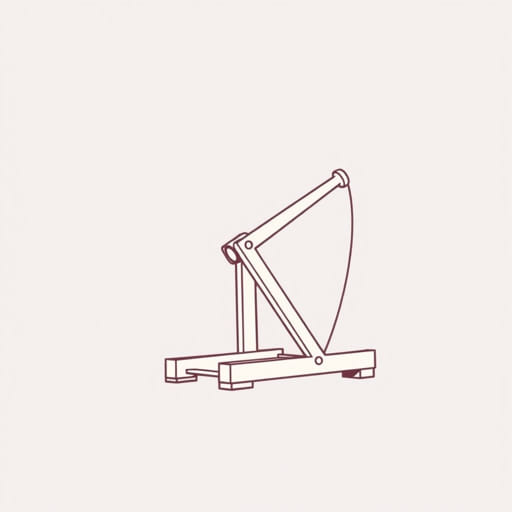
The onager catapult stands as one of the most iconic siege weapons of ancient warfare, known for its raw power and engineering ingenuity. Used primarily by the Romans and later by medieval armies, the onager was designed to hurl heavy projectiles over walls or at fortified positions. Its construction allowed for great force to be generated through torsion, launching rocks, firepots, and other destructive payloads. Understanding how the onager catapult worked, its historical significance, and its role in ancient military campaigns provides a fascinating glimpse into the evolution of siege warfare and military technology.
Origins and Development
Early Siege Engines
The onager catapult did not emerge in isolation but rather evolved from earlier siege devices used in the ancient Mediterranean. Devices like the ballista and the scorpio laid the groundwork for torsion-based artillery. The onager was distinct, however, in its focus on lobbing heavy stones in high arcs, making it more suitable for damaging fortifications and causing psychological impact on defenders.
Roman Innovation
The Romans are credited with refining the onager catapult into a practical battlefield weapon. Its name, derived from the wild ass known for its kicking power, symbolized the violent kickback it produced upon firing. Roman engineers used twisted ropes or sinew to store energy in the throwing arm, giving the onager its tremendous launching power. This torsion technology represented a leap forward in military design.
How the Onager Catapult Works
Basic Structure and Mechanics
The onager consisted of a sturdy wooden frame, a central throwing arm, and a basket or sling to hold the projectile. Two bundles of twisted ropes were housed in vertical frames on either side of the arm. When the arm was cranked down, the torsion in the ropes was increased. Upon release, the energy stored in the twisted ropes propelled the arm forward, launching the projectile in a high arc.
Projectile Types
The most common payload for an onager catapult was large stones, often weighing several kilograms. In addition to rocks, the onager could launch:
- Clay pots filled with flammable materials
- Corrosive substances like quicklime
- Sharp metal fragments to injure personnel
- Diseased corpses or animal carcasses in psychological warfare
Range and Accuracy
Depending on the size and materials used, an onager catapult could throw projectiles over 300 meters. However, it was not highly accurate. The weapon was mainly intended to cause chaos, structural damage, and fear. Commanders often employed several onagers simultaneously for maximum effect during prolonged sieges.
Military Applications
Siege Warfare
The onager was most useful during sieges. Set up outside city walls, it bombarded enemy defenses with continuous fire, weakening walls and creating breaches. Repeated strikes from heavy stones could collapse towers and buildings, forcing defenders into surrender or allowing assault troops to storm the opening.
Psychological Impact
Beyond physical destruction, the onager catapult served a psychological purpose. Its loud release, flying projectiles, and destructive power often terrified enemies. Defenders under siege knew that the next onager shot could collapse a wall or kill soldiers in its path. This fear often shortened the duration of sieges.
Naval Use and Limitations
Though occasionally mounted on ships, the onager’s powerful recoil made it impractical for naval use. Its primary domain remained on land where it could be braced firmly. The need for solid ground and space limited its deployment in mobile field battles, reinforcing its role as a stationary siege device.
Comparison with Other Siege Engines
Onager vs Ballista
The ballista, often likened to a giant crossbow, was more precise and used for targeting individuals or structural weak points. The onager, in contrast, had greater destructive power but less precision, making it more suitable for smashing fortifications.
Onager vs Trebuchet
In later centuries, the trebuchet replaced the onager in many European armies. The trebuchet used counterweight mechanics rather than torsion, allowing for greater accuracy and power. However, the onager remained simpler to build and maintain, which made it more accessible during earlier periods.
Legacy and Historical Impact
Role in Roman Campaigns
The onager was widely used during the Roman Empire’s expansion, particularly in the sieges of fortified cities across Europe, North Africa, and the Middle East. Its presence gave Roman legions a technological advantage in dismantling enemy strongholds and asserting control over rebellious provinces.
Continuing Use in the Middle Ages
After the fall of Rome, knowledge of torsion weapons like the onager persisted through the Byzantine Empire and into early medieval Europe. Though eventually replaced by more advanced engines, the onager’s influence continued in designs that emphasized long-range bombardment and mechanical force.
Symbol of Ancient Engineering
Today, the onager catapult remains a symbol of ancient engineering and military innovation. It is often reconstructed for educational demonstrations and featured in documentaries that explore the science behind historical warfare. Its simple yet effective design offers insight into how ancient armies approached the challenges of siege combat.
The onager catapult exemplifies the ingenuity and practicality of ancient warfare technology. Its ability to launch devastating projectiles using torsion made it a powerful tool in siege operations. While it may have lacked precision, the onager’s strength lay in its capacity to deliver sustained damage over long distances, demoralizing enemies and breaking defensive lines. From its roots in Roman engineering to its enduring presence in historical study, the onager catapult holds a respected place in the history of siege warfare.