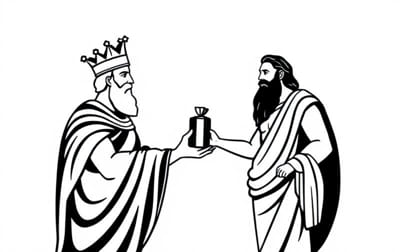
King Aeolus Gifts Odysseus With A Tale of Favor and MisfortuneIn Greek mythology, the story of Odysseus is one filled with extraordinary challenges and divine interventions. One of the pivotal moments in his long journey home after the Trojan War occurs when he encounters King Aeolus, the ruler of the winds. Aeolus plays a crucial role in Odysseus’s journey by gifting him a powerful item that, in many ways, influences the course of his fate.
But what exactly does King Aeolus gift to Odysseus, and how does this gift shape the legendary hero’s journey? Let’s explore the significance of Aeolus’s gift and its impact on Odysseus in Homer’s Odyssey.
Who Is King Aeolus?
King Aeolus is the ruler of the winds in Greek mythology. He is often depicted as a god with control over the various winds, who can release or restrain them at will. According to some myths, Aeolus is the son of Hippotas and the father of six sons and six daughters, who are often associated with specific winds or directions. In the Odyssey, Aeolus is portrayed as a wise and benevolent god, willing to help Odysseus on his perilous journey.
Aeolus lives on a floating island called Aeolia, a place surrounded by the great ocean. This island is said to be a place where the winds are kept under tight control. His realm is one of peace and tranquility, and it is here that Odysseus seeks refuge during his journey.
The Gift of the Winds
When Odysseus and his men arrive on the island of Aeolia, they are warmly welcomed by King Aeolus. Aeolus, recognizing Odysseus’s great strength and heroism, decides to offer a gift that will aid him in his journey. This gift is a powerful bag, which contains the winds of the world, except for the gentle west wind, which is meant to carry Odysseus and his crew safely home.
Aeolus instructs Odysseus to keep the bag sealed and only open it when they are close to their destination. The wind contained within the bag would ensure that their journey home would be swift and without further peril. However, Aeolus makes it clear that the bag must be handled with great care if opened prematurely, the winds could wreak havoc on their voyage.
The Misfortune of Odysseus’s Crew
After receiving the gift from Aeolus, Odysseus and his men set sail once more, filled with hope and anticipation of a safe journey home. However, as they approach their homeland, the crew, growing curious about the contents of the mysterious bag, begin to speculate on what might be inside.
The temptation proves too great. While Odysseus is asleep, his men decide to open the bag, believing it contains treasure or some other form of wealth. But when the bag is opened, all of the winds escape at once, creating a massive storm that blows them far off course. Instead of returning home, Odysseus and his men are once again thrown into the chaos of the sea, and their journey is delayed even further.
Aeolus’s Reaction No Second Chance
Upon learning of the crew’s actions, Odysseus and his men return to Aeolus’s island, hoping for forgiveness and further assistance. However, this time, Aeolus refuses to help them. He believes that the gods are against Odysseus and that his misfortune is a result of divine displeasure. Aeolus tells Odysseus that he cannot aid him again, as no mortal could be so cursed by the gods.
This marks a turning point in Odysseus’s journey. Without the gift of the winds, Odysseus and his men must face the challenges ahead without divine assistance. The lesson here is a poignant one even the gods can only do so much, and human folly or hubris can often undo the greatest of gifts.
The Symbolism of the Gift
The bag of winds given to Odysseus by King Aeolus serves as a significant symbol in Greek mythology. On one hand, the bag represents divine favor. Aeolus, a powerful deity, bestows a gift meant to ease Odysseus’s travels. However, the gift also symbolizes human weakness specifically, the inability of Odysseus’s crew to resist temptation.
In a broader sense, the bag of winds highlights the role of fate in the Odyssey. Despite receiving divine help, Odysseus’s journey is still fraught with challenges. The gods can only guide and assist; it is ultimately up to the hero to navigate the difficulties of his journey. The opening of the bag of winds is a reminder that even the best-laid plans can go awry due to human error or misjudgment.
The Role of the Gods in Odysseus’s Journey
Aeolus’s gift, though a symbol of divine assistance, also reflects the broader relationship between Odysseus and the gods. Throughout the Odyssey, the gods play a significant role in shaping Odysseus’s fate. Some, like Athena, offer guidance and protection, while others, like Poseidon, work to hinder his progress. The gods’ favor and displeasure are crucial to the hero’s journey.
However, the story also underscores the idea that the gods do not have total control over human actions. The misstep of Odysseus’s men in opening the bag of winds shows that, even with divine gifts, human decisions still shape the outcome of events. This tension between divine will and human agency is a central theme of the Odyssey.
Conclusion Lessons from Aeolus’s Gift
The gift of the winds from King Aeolus to Odysseus is one of the many moments in the Odyssey that highlight the interaction between mortals and gods. While the gift offers hope and the promise of a safe return home, it also serves as a cautionary tale. The crew’s failure to respect the gift’s power and their inability to resist temptation ultimately leads to their downfall.
In the end, Aeolus’s decision to deny further help emphasizes the importance of respecting divine intervention and the consequences of human folly. The story of the bag of winds remains a powerful symbol of how even the most well-intentioned gifts can be undone by human error, and it reinforces the idea that no one, not even a hero like Odysseus, is immune to the challenges of fate.
Suggested SEO Keywords
-
King Aeolus gift to Odysseus
-
Bag of winds in the Odyssey
-
Aeolus and Odysseus
-
Greek mythology Aeolus
-
Odysseus journey home
-
Odysseus misfortune with the winds
-
Aeolus in the Odyssey