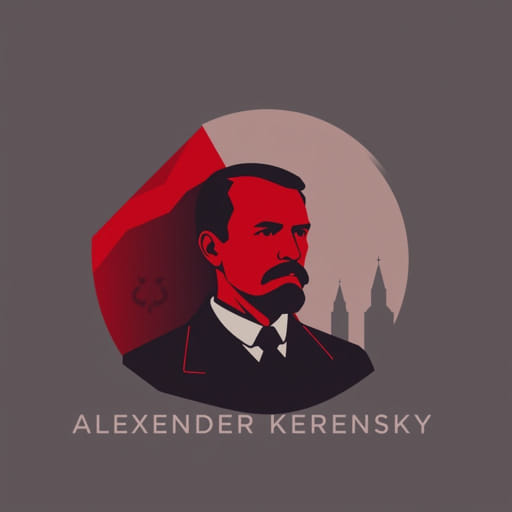
Interesting Facts About Alexander Kerensky A Revolutionary Leader in Russian HistoryAlexander Kerensky was a key figure in Russian history, particularly during the tumultuous period of the Russian Revolution of 1917. Known for his leadership during the February and October Revolutions, Kerensky’s role as a revolutionary leader has been both praised and criticized. This topic explores some of the most interesting facts about Alexander Kerensky, his rise to prominence, and his impact on the Russian Revolution.
Early Life and Education
Born on May 4, 1881, in Simbirsk, Russia, Alexander Kerensky came from a family of intellectuals. His father was a professor, and his mother was a member of the Russian nobility. Kerensky’s early education was in law, and he attended the University of St. Petersburg, where he studied law and became involved in political activism. His time at the university played a significant role in shaping his political beliefs, and it was here that he became increasingly critical of the autocratic rule of Tsar Nicholas II.
Kerensky’s early involvement in politics was marked by his association with left-wing political groups, particularly those advocating for the rights of workers and peasants. He joined the Social Revolutionary Party, which aimed to implement land reforms and promote social justice in Russia. His passion for reform and his eloquent speeches quickly made him a popular figure among the Russian masses.
Role in the February Revolution
The February Revolution of 1917 was a turning point in Russian history. It led to the abdication of Tsar Nicholas II and the end of over 300 years of Romanov rule. During this time, Kerensky rose to prominence as a leader of the revolution.
At the time of the revolution, Kerensky was serving as a member of the Russian Provisional Government, which was formed after the fall of the monarchy. He initially gained attention for his role as the Minister of Justice in the Provisional Government. Kerensky worked tirelessly to implement reforms, including granting civil liberties and expanding the rights of workers and soldiers.
His popularity soared as he became a symbol of the Russian people’s desire for change. However, his leadership was not without controversy. As a moderate socialist, Kerensky faced criticism from both the left and the right. While he championed democratic reforms, he was also reluctant to push for immediate land redistribution, which angered radical factions.
Kerensky’s Role in the October Revolution
Despite his initial success during the February Revolution, Kerensky’s leadership was soon tested by the October Revolution later that year. The October Revolution, led by the Bolshevik Party under Vladimir Lenin, resulted in the overthrow of the Provisional Government and the establishment of a communist regime in Russia.
Kerensky, who had become the head of the Provisional Government, found himself at odds with the Bolsheviks. His refusal to end Russia’s involvement in World War I alienated many of his supporters, particularly soldiers and workers who were weary of the war. At the same time, the Bolsheviks gained significant support with their promise to withdraw from the war and deliver land reforms to peasants.
In the days leading up to the October Revolution, Kerensky struggled to maintain control. His government was weakened by internal divisions, and he was unable to suppress the growing Bolshevik movement. When the Bolsheviks seized power in October 1917, Kerensky fled Petrograd (now St. Petersburg) in an attempt to rally support for a counter-revolution. However, he was unsuccessful, and the Bolsheviks solidified their control over Russia.
Kerensky’s Exile and Later Life
After the Bolshevik takeover, Kerensky went into exile. He spent time in Europe, including France and the United States, where he continued to advocate for the overthrow of the Bolshevik government and the establishment of a more democratic Russia. Despite his efforts, Kerensky’s influence diminished over time.
In exile, Kerensky wrote his memoirs, reflecting on his role in the Russian Revolution. His writings offer valuable insights into the political climate of the time and the challenges he faced as a leader. However, his reputation remained controversial. While some viewed him as a hero who sought to bring about democratic reforms, others saw him as a failure who could not prevent the rise of Bolshevism.
Kerensky lived the remainder of his life in relative obscurity. He died on June 11, 1970, in New York City at the age of 89. Despite his diminished influence in later years, Kerensky’s impact on Russian history cannot be overlooked.
Key Contributions and Legacy
Kerensky’s legacy is one of complexity. He is often remembered as the leader who attempted to steer Russia toward a more democratic future, yet he was unable to prevent the rise of Lenin and the Bolsheviks. His time as the head of the Provisional Government is a reminder of the challenges faced by leaders during times of revolution and social upheaval.
One of Kerensky’s most significant contributions was his role in establishing civil liberties and human rights in the early days of the Russian Revolution. Under his leadership, the Provisional Government granted freedoms of speech, assembly, and press. Kerensky also pushed for the implementation of universal suffrage and legal reforms that would have improved the lives of the working class.
However, Kerensky’s inability to navigate the growing influence of radical groups like the Bolsheviks and his failure to address key issues, such as land redistribution, ultimately led to his downfall. Despite his moderate socialist views, Kerensky’s inability to unite the various factions of Russian society contributed to the rise of the Bolsheviks and the establishment of a communist regime.
Kerensky’s Popularity in Russia Today
In Russia today, Kerensky remains a polarizing figure. While some view him as a tragic hero who tried to modernize Russia, others see him as a symbol of the failure of the Provisional Government and the loss of Russian democracy. His legacy is often overshadowed by the rise of the Bolshevik Revolution and the subsequent establishment of the Soviet Union.
However, Kerensky’s time in power still serves as an important lesson in the challenges of revolution and governance. His leadership during the February Revolution helped to create the political climate that allowed for the possibility of change, even if that change ultimately led to the rise of a communist dictatorship.
Alexander Kerensky’s life and career were marked by his pivotal role in the Russian Revolution of 1917. His leadership during the February Revolution and his attempt to steer Russia toward a more democratic path make him a fascinating figure in Russian history. Although his time in power was short-lived, Kerensky’s impact on the course of Russian history cannot be underestimated. His legacy continues to be a subject of debate and reflection, and his story serves as a reminder of the complexities of political leadership during times of crisis.