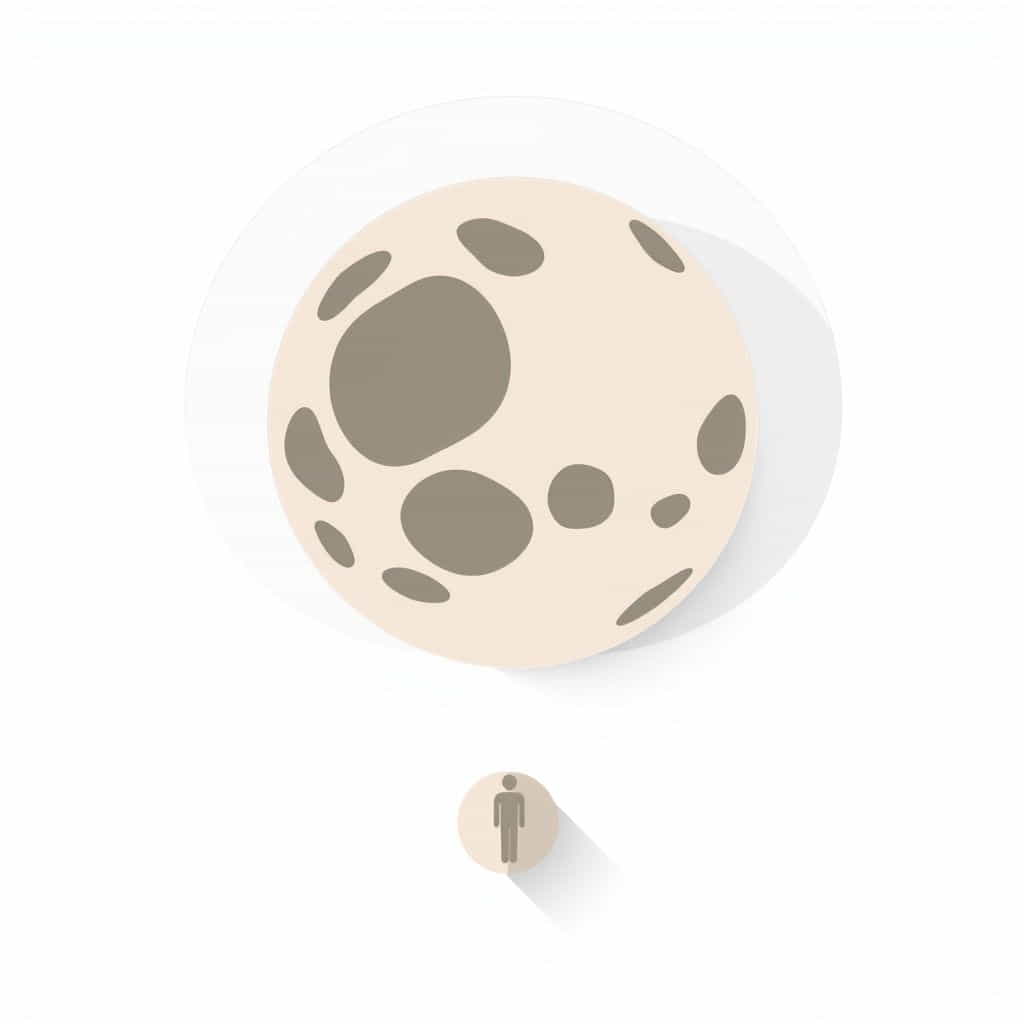
How Big Is Deimos? Exploring the Size and Features of Mars’ Smallest MoonWhen we think of moons in our solar system, the Earth’s Moon often comes to mind first. However, Mars has two small moons Phobos and Deimos. Among them, Deimos is the smaller and more distant one. Many people wonder, how big is Deimos? This topic dives into the size, features, and fascinating facts about Deimos, giving you a clear picture of this tiny Martian satellite.
What Is Deimos?
Deimos is one of the two natural satellites orbiting Mars. It was discovered in 1877 by American astronomer Asaph Hall. Compared to Earth’s Moon, Deimos is extremely small, irregularly shaped, and less studied. Its name comes from Greek mythology, meaning terror, a fitting companion to its larger sibling, Phobos, which means fear.
Size of Deimos How Big Is It?
Deimos is very small compared to most moons in our solar system. Its dimensions are roughly
-
Length About 15 kilometers (9.3 miles)
-
Width Approximately 12.2 kilometers (7.6 miles)
-
Thickness Around 11 kilometers (6.8 miles)
Because Deimos is not spherical, these numbers describe its longest, widest, and thickest dimensions. To put it simply, Deimos is about the size of a small city.
How Does Deimos Compare to Other Moons?
Deimos is tiny in comparison to Earth’s Moon, which has a diameter of about 3,474 kilometers. Even Mars’ other moon, Phobos, is larger, measuring about 27 kilometers at its longest dimension.
In the broader context of the solar system, Deimos is one of the smallest known moons orbiting a planet. Many asteroids are larger than Deimos, which has led scientists to believe it might be a captured asteroid.
Why Is Deimos So Small?
Scientists believe Deimos, along with Phobos, may be captured asteroids from the nearby asteroid belt. Its small size and irregular shape support this theory. Unlike larger moons formed from planetary debris, captured asteroids tend to keep their uneven forms.
Surface and Features of Deimos
Though small, Deimos has some interesting surface features
-
Craters It is covered with craters, the largest being about 2 kilometers wide.
-
Smooth Areas Compared to Phobos, Deimos has smoother regions, possibly due to dust and debris settling in low areas.
-
Regolith Layer A fine layer of dust and small rocks covers the surface, similar to the Moon’s surface on Earth.
Because of its weak gravity, the surface material can easily be disturbed by impacts.
Orbit and Distance from Mars
Deimos orbits Mars at a distance of about 23,460 kilometers (14,580 miles). It takes nearly 30.3 hours to complete one orbit around the Red Planet. This distance means Deimos is much farther from Mars than Phobos, which orbits closer and faster.
Gravity and Atmosphere on Deimos
The gravity on Deimos is extremely weak, about 0.003 times that of Earth. This means if you weigh 100 pounds on Earth, you would weigh just 0.3 pounds on Deimos.
Because it is so small and lacks sufficient gravity, Deimos does not have an atmosphere. Its surface is exposed directly to space, making it vulnerable to solar radiation and micrometeorite impacts.
Why Is Knowing the Size of Deimos Important?
Understanding the size of Deimos helps scientists in several ways
-
Space Missions Future missions to Mars might use Deimos as a base or stopping point.
-
Planetary Science Studying small moons like Deimos offers clues about the formation of the solar system.
-
Asteroid Research Since Deimos resembles an asteroid, it provides a natural laboratory to study these space rocks up close.
Interesting Facts About Deimos
-
Deimos is so small that it looks like a bright star from Mars.
-
Its irregular shape makes it resemble a potato more than a traditional moon.
-
Unlike larger moons, Deimos rotates slowly and is tidally locked, meaning the same side always faces Mars.
-
Due to its weak gravity, astronauts could theoretically jump high and travel long distances with ease on Deimos.
Conclusion Deimos – Small But Significant
Though tiny and less famous than many other moons, Deimos holds a unique place in our solar system. Measuring just about 15 kilometers in length, it challenges our ideas about moons and space objects. Its small size, irregular shape, and mysterious origin make it an exciting subject for both scientists and space enthusiasts.
As we explore Mars and its moons more in the future, understanding the exact size and features of Deimos will be key to unlocking new discoveries. Whether as a potential stepping stone for Mars missions or a natural relic from the early solar system, Deimos reminds us that even the smallest celestial bodies have big stories to tell.
By focusing on the size and features of Deimos, you get a clear, easy-to-understand overview of this intriguing Martian moon and why it matters in space exploration and astronomy.