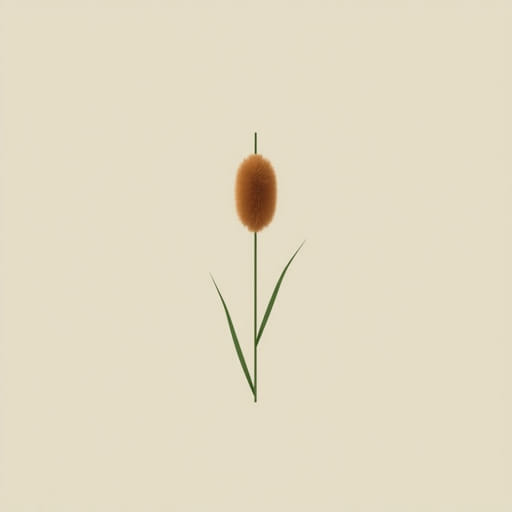
Is a Cattail a Flower? Understanding the Cattail PlantCattails are often seen growing along wetlands, lakes, and ponds, their tall, slender stalks topped with a distinctive brown, cigar-like shape. But many people wonder, is a cattail actually a flower? In this topic, we will explore the cattail plant in detail, uncovering its characteristics, reproductive process, and why it’s commonly mistaken for a flower. Let’s dive into the fascinating world of cattails and clarify the confusion.
What is a Cattail?
A cattail (genus Typha) is a type of wetland plant that is typically found in shallow waters, such as lakes, ponds, and marshes. They are known for their tall, slender stems that can grow anywhere from 3 to 10 feet tall, depending on the species and environmental conditions. The plant’s most distinguishing feature is its unique flower head, often described as resembling a cigar or a spike, which draws attention. But what is this structure, really?
The Structure of a Cattail Not Just a Flower
While the brown, cylindrical structure at the top of the cattail may appear to be a flower, it is actually a type of inflorescence, which is a cluster of flowers grouped together. This structure is called a spike, and it contains many small flowers. The spike is covered in a dense mass of tiny flowers that are arranged in a way that gives it its characteristic look.
The actual flowers of the cattail are quite different from what many people expect when they think of flowers. Cattails have unisexual flowers male flowers and female flowers are found on the same plant, but in separate clusters. The male flowers, which are located at the top of the spike, are responsible for producing pollen, while the female flowers, located below, are the ones that will eventually develop into the seeds.
The Reproductive Process of Cattails
Cattails are not flowering plants in the traditional sense. Rather than having a single flower, they have many small flowers that cluster together to form the inflorescence. The reproductive process of cattails involves pollination and seed production. Here’s how it works
-
Pollination The male flowers at the top of the spike release pollen into the air. The wind then carries this pollen to the female flowers, which are located just below the male flowers. This process is known as wind pollination.
-
Seed Formation After successful pollination, the female flowers begin to develop seeds. The seed heads turn from green to brown as the seeds mature.
-
Dispersal Once the seeds are fully formed, they are released into the environment. The seeds are light and fluffy, allowing them to be carried by the wind to new locations, where they can grow into new cattail plants.
While the spike resembles a flower head, it is important to remember that cattails are not typical flowers. They are more accurately classified as an inflorescence, a collection of many small flowers grouped together.
Cattails and Their Ecological Role
Cattails play a crucial role in wetland ecosystems. They help stabilize the soil along shorelines, preventing erosion, and their dense growth provides shelter and food for various wildlife species. Cattails are a valuable food source for many animals, including beavers, muskrats, and birds. Additionally, cattails help filter water by absorbing excess nutrients and pollutants, contributing to water purification.
Their presence in wetlands is also vital for biodiversity, as they create habitats for various species of insects, amphibians, and birds. Though the plant may seem simple, it plays an essential role in maintaining the health and balance of these ecosystems.
Cattails vs. True Flowers
It is easy to confuse cattails with flowers because of their appearance. However, as mentioned earlier, cattails are technically a type of inflorescence. To understand the difference, let’s take a closer look at true flowers. True flowers typically have distinct parts, including petals, sepals, stamens (male parts), and pistils (female parts). Cattails, however, lack the showy petals and other traditional floral structures.
In addition, true flowers are often colorful and fragrant to attract pollinators such as bees, butterflies, or birds. Cattails, on the other hand, rely on the wind for pollination, and their reproductive structures are not designed to attract pollinators in the same way that many other flowers are.
Uses of Cattails in Nature and Culture
Despite not being a ‘flower’ in the conventional sense, cattails have a wide range of uses in both nature and human culture. Historically, cattails have been used by indigenous peoples for food, medicine, and crafting. The tender young shoots are edible, and the roots can be ground into flour. The fluffy seed heads were once used as insulation in bedding and clothing, while the long leaves were woven into mats and baskets.
Cattails are also used in modern landscaping for water filtration and erosion control. Their ability to thrive in wetland environments makes them a practical choice for maintaining the health of aquatic ecosystems.
Conclusion Is a Cattail a Flower?
while cattails may appear to be flowers at first glance, they are not true flowers. The brown, cylindrical structure is actually an inflorescence composed of many small flowers, which are arranged in a spike. Cattails play an important ecological role in wetland ecosystems and have a variety of practical uses for humans.
Understanding the nature of cattails helps clarify the distinction between different types of plants and their reproductive strategies. So, the next time you spot a cattail along the shore of a pond or lake, you’ll know that you’re looking at an intricate cluster of flowers, not just a simple flower in the traditional sense.