Largest Hexadecimal Number in 8 Bits Understanding the ConceptWhen working with binary or hexadecimal systems in computing, it’s essential to understand the limitations and potential of these numeral systems. One key concept to grasp is the largest hexadecimal number that can be represented within a specific number of bits. In this topic, we will explore the largest hexadecimal number that can be represented in 8 bits, how it is calculated, and its significance in various computing applications.
What is Hexadecimal?
Before diving into the specifics of the largest hexadecimal number in 8 bits, it’s important to understand the hexadecimal system. Hexadecimal is a base-16 numeral system, meaning it uses sixteen distinct symbols the digits 0 to 9, and the letters A to F. These letters represent values 10 to 15. Hexadecimal is often used in computing because it is more compact and easier to read than binary, yet it aligns well with the binary system that computers use internally.
-
Hexadecimal digits 0, 1, 2, 3, 4, 5, 6, 7, 8, 9, A, B, C, D, E, F
-
Decimal equivalents
-
0 to 9 (same as decimal)
-
A = 10, B = 11, C = 12, D = 13, E = 14, F = 15
-
In computing, hexadecimal is commonly used to represent large binary numbers in a more human-readable format, as each hexadecimal digit corresponds to four binary digits (or bits).
What is 8-Bit Representation?
An 8-bit system means that we are working with a number that can be represented by 8 binary digits, also called bits. Each bit can either be 0 or 1, so with 8 bits, we can have 2^8 (256) possible values. These values range from 0 to 255 in decimal.
-
Maximum decimal value in 8 bits 255
-
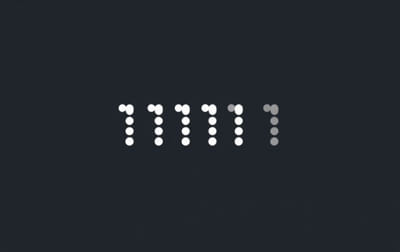
Binary representation 11111111
This binary number (11111111) is the largest possible value in 8 bits. In the hexadecimal system, we need to convert this binary number into its hexadecimal equivalent.
Converting 8-Bit Binary to Hexadecimal
To convert an 8-bit binary number into hexadecimal, we divide the binary number into two 4-bit segments (since each hexadecimal digit represents 4 bits), then convert each 4-bit segment into its hexadecimal equivalent.
Let’s convert the binary number 11111111 to hexadecimal
-
Split the binary number into two 4-bit groups 1111 | 1111
-
Convert each 4-bit group into hexadecimal
-
1111 in binary equals F in hexadecimal.
-
1111 in binary also equals F in hexadecimal.
-
Thus, the largest 8-bit number in hexadecimal is FF.
The Largest Hexadecimal Number in 8 Bits FF
Now that we know the conversion process, we can conclude that the largest hexadecimal number in 8 bits is FF. This value represents the number 255 in decimal and is the maximum possible value that can be represented in an 8-bit system using hexadecimal notation.
Here’s a summary of the conversion
-
Binary 11111111
-
Hexadecimal FF
-
Decimal 255
Significance of the Largest Hexadecimal Number in 8 Bits
The largest hexadecimal number in 8 bits, FF, plays a significant role in various areas of computing, especially in systems that handle data at the byte level.
-
Memory Addressing In many computing systems, data is stored and processed in bytes (8 bits). The largest hexadecimal number in 8 bits, FF, is crucial when it comes to addressing memory locations or understanding the capacity of storage units. For example, if you are working with a memory address space of 8 bits, the maximum addressable location would be FF.
-
Color Representation Hexadecimal numbers are often used in graphic design and web development to represent colors. An 8-bit color channel can represent 256 different color intensities (from 0 to FF). Each pair of hexadecimal digits in a color code represents one color channel (red, green, or blue), with FF indicating the maximum intensity for that color.
-
Data Transmission When data is transmitted in 8-bit chunks, the largest possible value transmitted in a single chunk is FF. Understanding the range of possible values is essential for ensuring proper data transmission and processing.
Practical Examples of FF in Computing
Let’s explore some common real-world scenarios where the largest hexadecimal number in 8 bits (FF) is relevant
-
8-Bit Image Representation In digital imaging, pixel values are often represented in 8 bits per channel, meaning that each color channel (red, green, and blue) can have a value between 0 and FF. For example, the color pure red might be represented as #FF0000, where FF is the maximum value for the red channel and 0 is the minimum for green and blue.
-
Data Encryption Many encryption algorithms use binary or hexadecimal representations to encode and decode data. The 8-bit representation of FF may appear frequently in the padding or masking phases of encryption operations, helping ensure data integrity and security.
-
File Sizes and Limits When dealing with file sizes or buffer sizes in computer programming, knowing that FF in hexadecimal equals 255 in decimal can help developers handle limits and boundaries efficiently. For example, if a system is designed to handle files of 255 bytes, the largest possible file size would be FF bytes.
The largest hexadecimal number that can be represented in 8 bits is FF. Understanding this number is fundamental in many areas of computing, from memory addressing to color representation and data transmission. By recognizing the relationship between binary, decimal, and hexadecimal systems, you can better navigate the world of computing and software development.
Remember that FF is just one example of how hexadecimal is used to simplify complex binary data. Whether you’re working with images, programming, or dealing with memory and storage, understanding the limits of 8-bit numbers can help you optimize your work in the digital space.