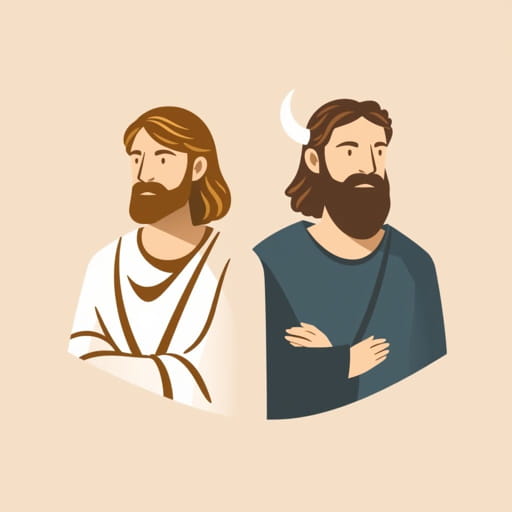
In the Bible The Story of Jacob and EsauThe story of Jacob and Esau is one of the most well-known narratives in the Bible, found in the Book of Genesis. These two brothers, born to Isaac and Rebekah, became central figures in the story of God’s covenant with the people of Israel. Their relationship is marked by conflict, deception, and eventual reconciliation, offering valuable lessons about the complexities of family dynamics, divine plans, and personal growth.
In this topic, we will explore the biblical story of Jacob and Esau, examining the key events, the characters involved, and the profound themes that emerge from their lives. Through their story, we see how God works through human flaws to fulfill His greater purpose.
The Birth of Jacob and Esau A Prophetic Beginning
Jacob and Esau were twins, the sons of Isaac and Rebekah. Their birth, however, was far from ordinary. Rebekah, who had been unable to conceive for many years, prayed to God for a child, and God responded by telling her that two nations were within her womb. She was told that the older would serve the younger (Genesis 2523), a prophecy that set the stage for their tumultuous relationship.
Esau, the older twin, was born first, with Jacob following closely behind, gripping Esau’s heel. From the moment of their birth, the brothers were marked by rivalry, a theme that would continue throughout their lives.
Esau The Man of the Field
Esau is described as a skilled hunter, a man of the outdoors who loved to roam the fields and wilderness. He was his father Isaac’s favorite because of his hunting abilities and the tasty game he brought home. Esau’s nature was rugged and wild, and his personality reflected his love for physical pursuits and a simple, straightforward life.
However, Esau’s impulsive nature and short-term focus on his desires led to some crucial moments that would impact his future. One of the most significant events in his life was when he sold his birthright to his brother, Jacob, for a bowl of lentil stew.
Jacob The Deceiver and the Chosen One
Jacob, in contrast, was more reserved and stayed close to home, helping his mother, Rebekah, with the household tasks. He was described as a man who ‘stayed among the tents’ (Genesis 2527), unlike his brother Esau, who was always out hunting. While Isaac favored Esau, Rebekah had a strong affection for Jacob. This preference would play a pivotal role in shaping the course of their lives.
Jacob’s cunning nature led to him taking advantage of Esau’s impulsiveness. One day, when Esau returned from the field famished, Jacob offered to trade a bowl of stew for Esau’s birthright. Esau, driven by hunger and a lack of foresight, agreed to the deal, selling his birthright for a single meal (Genesis 2529-34). This moment would mark the beginning of a series of events that would change both brothers’ lives.
The Deception Jacob Steals Esau’s Blessing
The rivalry between Jacob and Esau intensified when Isaac, now old and blind, prepared to bless his firstborn son, Esau. Rebekah, who favored Jacob, overheard Isaac’s plan and devised a plan to ensure that Jacob would receive the blessing instead. She instructed Jacob to disguise himself as Esau by wearing his brother’s clothes and covering his arms and neck with goat skins to mimic Esau’s hairy body.
Jacob followed his mother’s instructions, and when he presented himself to Isaac, the blind father was initially suspicious but ultimately gave Jacob the blessing meant for Esau. Jacob’s deception was successful, and he received the birthright blessing, which included God’s covenant promise and the inheritance of the family’s wealth (Genesis 271-29).
Esau’s Anguish and the Separation
When Esau discovered that his blessing had been stolen by Jacob, he was devastated. He begged his father for a blessing of his own, but Isaac told him that the blessing had already been given to Jacob and could not be revoked. Esau’s anger burned, and he vowed to kill Jacob as soon as their father died (Genesis 2730-41).
In response to Esau’s threat, Rebekah advised Jacob to flee to her brother Laban’s house in Haran, far away from Esau’s reach. Jacob left his family and home, embarking on a journey that would change his life forever. The separation between the two brothers marked the beginning of a long period of estrangement, during which each would undergo significant personal transformation.
Jacob’s Journey and Transformation
Jacob’s journey to Haran was not only a physical one but also a spiritual journey. On his way, he had a profound dream of a ladder reaching from earth to heaven, with angels ascending and descending upon it. In the dream, God spoke to Jacob, reaffirming the covenant He had made with Abraham and Isaac and promising to bless Jacob and his descendants (Genesis 2810-22). This dream marked a turning point for Jacob, as he began to recognize God’s presence and plan in his life.
Over the years, Jacob worked for his uncle Laban, enduring many trials and hardships. Through his labor, he married Leah and Rachel, and fathered twelve sons, who would become the twelve tribes of Israel. Jacob’s character was refined through these years, as he learned the importance of humility, perseverance, and trust in God.
The Reconciliation Jacob and Esau Meet Again
After many years, Jacob returned home with his family and wealth, but he feared facing Esau, knowing that his brother still harbored anger. He sent messengers ahead to Esau, offering gifts to appease him. When the two brothers finally met, Esau ran to Jacob, embraced him, and kissed him. The two reconciled, and Esau forgave Jacob for the wrongs he had committed (Genesis 331-15).
This reconciliation marked the end of the conflict between the two brothers. It also demonstrated the power of forgiveness and the grace of God in healing broken relationships.
Key Lessons from the Story of Jacob and Esau
The story of Jacob and Esau is filled with lessons that resonate with people of all walks of life.
1. The Consequences of Deception
Jacob’s deceitful actions, while ultimately leading to God’s fulfillment of His plan, had lasting consequences. Jacob experienced personal hardship, fear, and separation from his family because of his deceit. This serves as a reminder of the destructive power of dishonesty.
2. God’s Sovereignty
Despite the flaws and mistakes of Jacob and Esau, God’s will prevailed. The prophecy that the older would serve the younger came to pass, and God worked through their lives to bring about His greater plan for the people of Israel.
3. The Power of Forgiveness
The reconciliation between Jacob and Esau teaches us about the importance of forgiveness. Esau’s willingness to forgive Jacob after all that had happened highlights the healing power of grace and reconciliation in relationships.
Conclusion A Story of Redemption and Grace
The story of Jacob and Esau is a powerful narrative about rivalry, deception, repentance, and reconciliation. It shows that even in the midst of family conflict and personal mistakes, God’s plan is sovereign, and redemption is always possible. Through their story, we learn about the importance of forgiveness, the consequences of our actions, and the way God uses imperfect people to fulfill His divine purposes. The tale of Jacob and Esau reminds us that, despite our flaws, there is always the opportunity for transformation and reconciliation.