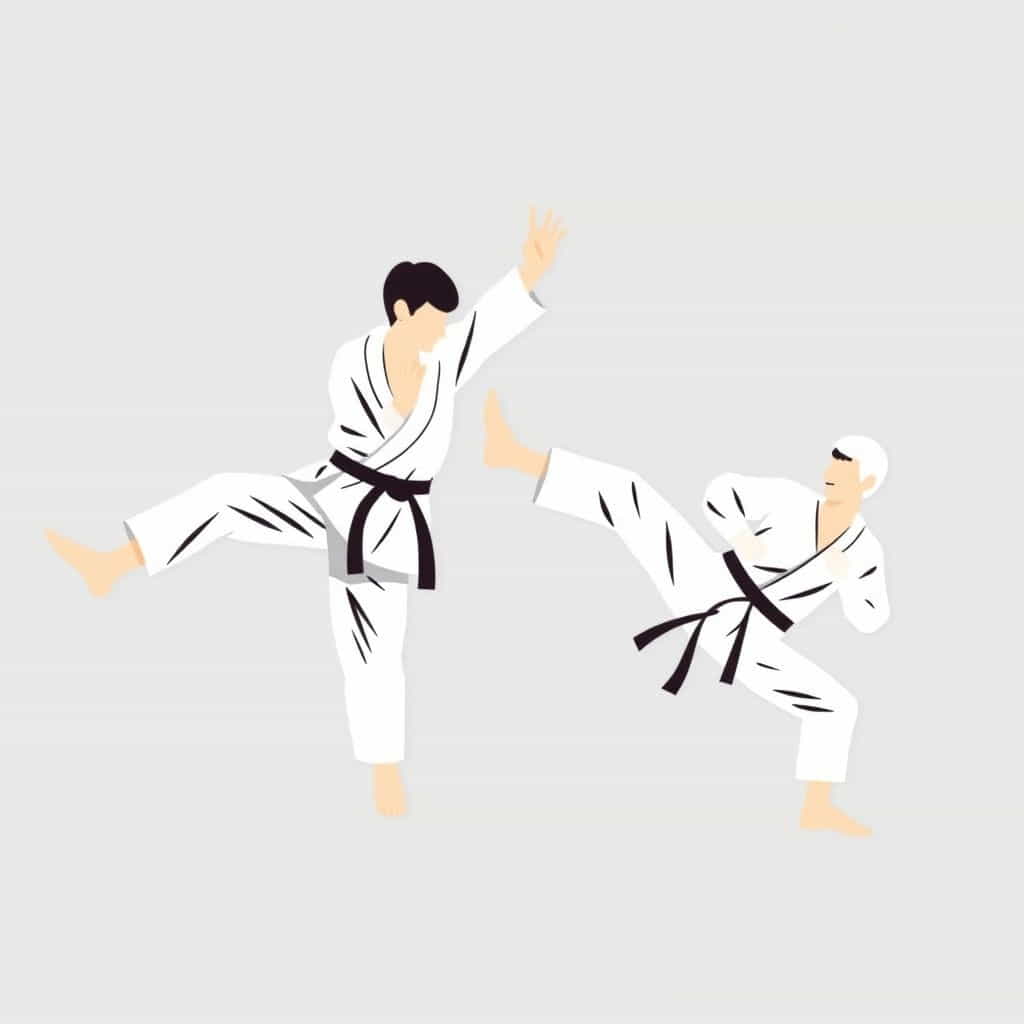
Difference Between Jujitsu and Taekwondo Understanding Two Powerful Martial ArtsMartial arts are practiced worldwide, each with its unique techniques, philosophy, and history. Among the most popular martial arts are Jujitsu and Taekwondo. Although both are effective in self-defense and combat, they differ significantly in their approach, training methods, and the skills they emphasize. In this topic, we will explore the key differences between Jujitsu and Taekwondo, focusing on their origins, techniques, training styles, and philosophies.
The Origins of Jujitsu and Taekwondo
Jujitsu The Art of Flexibility and Control
Jujitsu (or Jujutsu) is a Japanese martial art that dates back to the feudal era. It was originally developed by the Samurai as a way to defend themselves in situations where weapons were not available. Jujitsu’s primary focus is on grappling, joint locks, throws, and submissions, making it effective for close-quarters combat. Unlike many other martial arts that focus on striking, Jujitsu is built around the principle of using an opponent’s strength and force against them.
Jujitsu’s emphasis on practical self-defense techniques, including defense against armed opponents, helped establish it as a martial art of choice for warriors. Over time, Jujitsu evolved and became a foundational element for other martial arts like Judo and Brazilian Jiu-Jitsu.
Taekwondo The Way of the Foot and Hand
Taekwondo is a Korean martial art known for its powerful and fast kicking techniques. Its origins trace back to traditional Korean martial arts, but the modern version of Taekwondo was developed in the 1950s, influenced by elements of Japanese Karate and Chinese martial arts. The word "Taekwondo" translates to "the way of the foot and fist," emphasizing the importance of kicking and striking in this discipline.
Unlike Jujitsu, which focuses on grappling, Taekwondo is known for its high-speed kicks, dynamic footwork, and powerful punches. It places a strong emphasis on striking techniques, agility, and flexibility, with practitioners aiming to deliver precise, powerful strikes in a combat setting.
Key Differences in Techniques
Jujitsu Techniques
Jujitsu relies heavily on grappling and joint manipulation. Some of the key techniques in Jujitsu include
-
Joint Locks These are techniques that involve manipulating an opponent’s joints to force them into submission or to immobilize them. Common joint locks target the wrists, elbows, and shoulders.
-
Throws and Takedowns Jujitsu incorporates various throws and takedowns to control and immobilize an opponent. These techniques often involve using leverage to throw the opponent to the ground, where additional submission holds can be applied.
-
Submissions Jujitsu focuses on submissions, such as chokeholds and joint locks, which are designed to force the opponent to tap out or surrender. These techniques are often applied when the opponent is on the ground.
-
Defense Against Weapons Jujitsu also trains practitioners in defending against weapons such as swords, knives, and sticks. The art involves using control, leverage, and disarming techniques to neutralize the threat.
Taekwondo Techniques
Taekwondo, on the other hand, is a striking art that emphasizes kicks and punches. The key techniques in Taekwondo include
-
Kicks Taekwondo is best known for its dynamic and high-flying kicks. Some of the most common kicks in Taekwondo include the front kick (Ap Chagi), roundhouse kick (Dollyo Chagi), and side kick (Yop Chagi). These kicks are designed for speed, precision, and power.
-
Punches Taekwondo practitioners also use punches, such as the straight punch (Ap Joomuk) and the backfist strike (Dung Joomuk). However, the emphasis is usually on delivering powerful strikes with the feet rather than the hands.
-
Blocks and Parrying Defensive techniques in Taekwondo include various types of blocks, such as the low block (Arae Makgi) and high block (Eolgul Makgi), which are designed to deflect or counter incoming strikes.
-
Kata (Patterns) Similar to Karate, Taekwondo practitioners train in pre-arranged movements known as patterns (or "poomsae"), which simulate various combat scenarios and help develop muscle memory, balance, and focus.
Training and Philosophy
Jujitsu Training Emphasis on Practicality
The training in Jujitsu often involves real-world applications, where practitioners learn how to defend against various types of attacks, including armed and unarmed opponents. The focus is on practical self-defense, and Jujitsu practitioners often engage in sparring and grappling drills to develop their skills.
Jujitsu’s philosophy is centered around the idea of using an opponent’s force and momentum against them, which means that technique and leverage play a more important role than strength. Jujitsu also promotes adaptability and the ability to handle multiple situations, which makes it an effective choice for self-defense.
Taekwondo Training Discipline and Control
Taekwondo training is highly structured, with an emphasis on discipline, control, and mental focus. Practitioners undergo rigorous physical training, including conditioning exercises to build flexibility, strength, and stamina. Sparring, or Kyorugi, is a central aspect of Taekwondo training, where students practice their striking techniques against opponents in a controlled environment.
Taekwondo also places great importance on self-discipline and respect for others. The training is designed not only to improve physical skills but also to develop mental toughness and self-control. Poomsae (patterns) are essential to Taekwondo practice, as they help students internalize techniques and prepare for real-life combat situations.
The Differences in Combat Strategy
Jujitsu Combat Strategy Close Combat and Control
In a combat situation, Jujitsu practitioners rely on their ability to control the opponent through grappling and submission holds. Jujitsu is particularly effective in close combat scenarios, where strikes may not be as effective. The goal in Jujitsu is to subdue the opponent by using leverage and technique rather than brute strength.
Jujitsu practitioners focus on taking their opponent to the ground and applying joint locks, chokes, or throws to gain control and force a submission. This makes Jujitsu particularly effective in situations where striking is not possible or when dealing with larger opponents.
Taekwondo Combat Strategy Speed and Striking Power
In contrast, Taekwondo’s combat strategy focuses on striking with speed, precision, and power. The primary goal in Taekwondo is to strike the opponent with powerful kicks and punches, often targeting the head or torso. The emphasis is on delivering fast and clean strikes, and the practitioner aims to create distance between themselves and the opponent to avoid close-range combat.
Taekwondo practitioners are trained to use their footwork and agility to stay mobile and avoid being struck, making it a highly dynamic form of martial arts. The focus on high, fast kicks gives Taekwondo practitioners a unique advantage in striking from a distance.
Conclusion
In conclusion, both Jujitsu and Taekwondo are highly effective martial arts, but they differ greatly in their approach, techniques, and philosophies. Jujitsu emphasizes grappling, joint locks, and submissions, with a focus on using an opponent’s force against them. It is especially effective in close combat and self-defense situations where control and technique are paramount.
On the other hand, Taekwondo is a striking-based martial art that focuses on kicks and punches, with an emphasis on speed, precision, and powerful strikes. It is well-suited for long-range combat and aims to incapacitate an opponent with powerful strikes from a distance.
Choosing between Jujitsu and Taekwondo depends largely on individual preferences and what one hopes to gain from their martial arts practice. Whether you are looking to learn self-defense through grappling and control or prefer the art of striking with speed and precision, both martial arts offer valuable skills that can enhance physical fitness, mental discipline, and self-confidence.