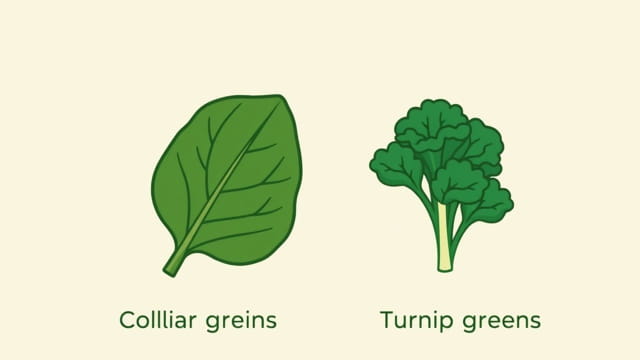
When it comes to leafy greens, collard greens and turnip greens are two popular choices that often get confused due to their similar appearance and usage. Both are staples in Southern American cooking and offer a variety of nutritional benefits, but they have distinct differences in flavor, texture, and culinary applications. Understanding these differences can help you choose the right green for your meals, whether you’re making a classic Southern dish, a healthy side, or simply looking to diversify your vegetable intake. This topic will explore collard greens vs turnip greens in detail, covering their taste, nutrition, preparation methods, and tips for cooking.
What Are Collard Greens?
Origin and Description
Collard greens belong to the Brassica family, closely related to cabbage and kale. They have large, broad, dark green leaves with a slightly waxy texture and prominent veins. Collards have been cultivated for centuries, particularly favored in Southern United States cuisine due to their hearty texture and robust flavor that holds up well in slow cooking.
Flavor Profile
Collard greens have a mild, slightly bitter taste with earthy undertones. Their flavor is less sharp compared to other greens like mustard or kale, making them more versatile in recipes. When cooked slowly, collards develop a tender texture and mellow taste that complements smoked meats and rich seasonings often used in traditional Southern dishes.
What Are Turnip Greens?
Origin and Description
Turnip greens are the leafy tops of the turnip plant, also part of the Brassica family. These greens tend to be smaller and more tender than collards, with jagged edges and a lighter green color. Unlike collards, turnip greens grow attached to a root vegetable, which is commonly used in many cuisines around the world.
Flavor Profile
Turnip greens have a more pronounced peppery and slightly spicy flavor compared to collard greens. Their taste is often described as sharper and more pungent, with a hint of bitterness. This makes them excellent for dishes that benefit from a bit of bite or zest, and they can stand up well to bold seasonings and vinegar-based dressings.
Nutritional Comparison
Health Benefits of Collard Greens
Collard greens are rich in vitamins A, C, and K, as well as minerals like calcium, iron, and magnesium. Their high fiber content promotes digestive health, while antioxidants help reduce inflammation. Collards are known to support bone health due to their calcium content and may aid in heart health thanks to their fiber and antioxidant profile.
Health Benefits of Turnip Greens
Turnip greens share many of the nutritional benefits of collards, including high levels of vitamins A, C, and K. They also provide essential minerals such as calcium and potassium. Due to their peppery nature, turnip greens contain compounds called glucosinolates, which have been studied for potential cancer-preventing properties. Their lower calorie count and fiber content also make them ideal for weight management and digestive support.
Summary of Nutrients
- Vitamin A: Both greens are excellent sources, supporting vision and immune health.
- Vitamin C: Important for skin health and immune function; slightly higher in turnip greens.
- Vitamin K: Essential for blood clotting and bone health, abundant in both greens.
- Calcium: Supports strong bones; collards contain slightly more calcium than turnip greens.
- Fiber: Promotes digestive health and satiety; both greens are good sources.
Cooking and Preparation Differences
Preparing Collard Greens
Collard greens require a bit more prep due to their thick leaves and tough stems. It’s common to remove the thick ribs before cooking to ensure tenderness. They are often simmered or braised for a longer time to soften the texture and mellow the flavor. Traditional recipes include cooking collards with smoked ham hocks, bacon, or spices to infuse flavor.
Preparing Turnip Greens
Turnip greens are more tender and have a quicker cooking time. They can be steamed, sautéed, or added fresh to salads. Because of their peppery flavor, many cooks use turnip greens in recipes where a slight spice is desired. The stems can be eaten if chopped finely, as they are more tender than collard stems.
Common Cooking Methods
- Collard Greens: Slow-cooked braises, soups, stews, or sautéed with garlic and chili flakes.
- Turnip Greens: Quick sauté, steamed side dish, fresh salads, or incorporated into stir-fries.
Culinary Uses and Pairings
Traditional Southern Dishes
Collard greens are a cornerstone of Southern cuisine, often served alongside cornbread, fried chicken, and black-eyed peas. Their mellow bitterness balances rich, fatty meats and smoky flavors. Turnip greens also appear in Southern cooking but are sometimes used interchangeably with collards, especially when a sharper taste is preferred.
Modern and International Recipes
Turnip greens lend themselves well to fusion recipes due to their peppery kick. They can be added to grain bowls, pasta dishes, and even smoothies. Collards, on the other hand, are often used as wraps or as a base for hearty salads. Both greens can be blended into pestos or added to vegetable juices for a nutritional boost.
Buying and Storage Tips
Selecting Fresh Greens
Look for vibrant, deep green leaves with minimal yellowing or wilting. Collard greens tend to have thicker, sturdier leaves, while turnip greens will be more delicate. Freshness is key to avoid bitterness and to ensure tenderness in cooking.
Storage Recommendations
Store both greens in the refrigerator, wrapped in a damp paper towel inside a plastic bag. Use within a few days for best quality. Avoid washing until just before cooking to prevent moisture buildup and spoilage.
Summary: Collard Greens vs Turnip Greens
- Appearance: Collard greens have larger, thicker leaves; turnip greens are smaller and more delicate.
- Flavor: Collards are milder and earthier; turnip greens are peppery and slightly spicy.
- Nutrition: Both are nutrient-dense with slight variations in vitamin and mineral content.
- Cooking: Collards require longer cooking times; turnip greens cook quickly and can be eaten raw.
- Culinary Use: Collards are traditional in Southern slow-cooked dishes; turnip greens fit well in fresh or lightly cooked recipes.
Choosing between collard greens and turnip greens depends on your flavor preference, cooking time, and the type of dish you want to create. Both offer exceptional nutritional benefits and can add vibrant color and texture to your meals. While collard greens shine in hearty, slow-cooked recipes, turnip greens bring a fresh, peppery note that works well in quicker dishes or salads. Incorporating either, or both, into your diet is a fantastic way to enjoy wholesome, leafy greens packed with flavor and health benefits.