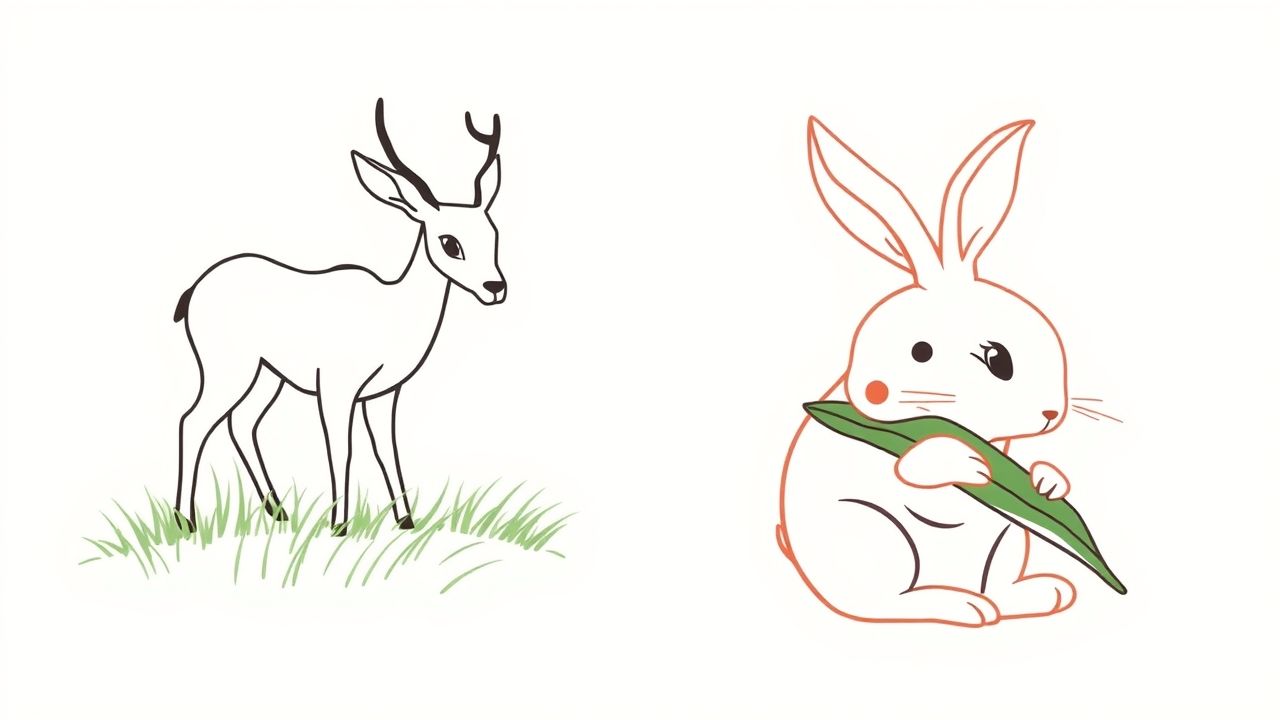
Herbivorous animals play a crucial role in the balance of ecosystems, acting as primary consumers that feed directly on plants. These creatures have adapted over time to digest fibrous vegetation and are essential in the food chain, transferring energy from producers to higher-level consumers. From massive elephants to tiny rabbits, herbivores display a wide range of sizes, behaviors, and habitats. Understanding herbivorous animals not only helps us learn more about animal biology but also highlights the delicate relationships among plants, animals, and the environment. This topic focuses on two prominent herbivores and explores their unique characteristics and ecological importance.
What Is a Herbivore?
A herbivore is an animal that feeds exclusively or mainly on plant material. This includes grasses, leaves, fruits, seeds, bark, and even aquatic vegetation. Unlike omnivores or carnivores, herbivores have digestive systems specially designed to process cellulose, which is abundant in plant matter.
Characteristics of Herbivorous Animals
- Flat and broad molars for grinding food
- Long digestive tracts to process fibrous plant materials
- Strong lips and tongues for pulling vegetation
- Generally non-aggressive behavior
- Live in habitats rich in vegetation such as forests, grasslands, and wetlands
Example 1: The Cow
The cow is one of the most well-known herbivorous animals. Domesticated across the world, cows are essential in agriculture and livestock farming. Their primary diet consists of grass, hay, and other plant-based feed. As ruminants, cows possess a unique four-chambered stomach that allows them to break down tough plant materials through a process known as rumination or chewing the cud.
Physical Features
Cows have wide, flat teeth designed to grind and crush plant matter. Their tongues are strong and capable of pulling up large amounts of grass. The four stomach chambers rumen, reticulum, omasum, and abomasum work in stages to ferment, digest, and absorb nutrients from their diet.
Importance to Humans
- Source of milk, meat, leather, and manure
- Used in traditional plowing and farming in some regions
- Integral to rural economies and agricultural sustainability
Ecological Role
In natural settings, cows or related species such as wild buffaloes help maintain grasslands. Their grazing prevents overgrowth, their hooves churn the soil, and their waste fertilizes the land. This cycle helps preserve soil quality and encourages plant biodiversity.
Example 2: The Elephant
Elephants are the largest land mammals and are strictly herbivorous. There are three species of elephants: African bush elephants, African forest elephants, and Asian elephants. All of them share a diet that includes leaves, bark, roots, fruits, and grass. Despite their size, elephants rely on a high volume of plant intake consuming up to 300 pounds of vegetation in a single day.
Feeding Habits
Elephants use their trunks to grab, pull, and guide food into their mouths. Their molars are large and flat, allowing them to grind tough plant material efficiently. They often strip entire trees of leaves and bark and can even push over trees to reach the highest branches.
Behavior and Habitat
Elephants are highly social and intelligent creatures. They live in matriarchal herds and travel vast distances in search of food and water. Their habitats range from forests and savannas in Africa to tropical jungles in Asia. Because they consume and redistribute seeds through their dung, elephants are often called ‘ecosystem engineers.’
Ecological Contribution
- Facilitate seed dispersal through feces
- Create water holes used by other animals
- Maintain open landscapes by knocking down trees
- Help regulate the density of plant populations
Why Understanding Herbivores Matters
Herbivores are a vital link in the food chain. They serve as prey for carnivores and omnivores and are indicators of environmental health. When herbivore populations decline, it often signals problems in vegetation or ecosystem stability. On the other hand, overpopulation of herbivores can lead to overgrazing, which negatively impacts plant regeneration and soil quality.
Conservation Concerns
Many herbivorous animals face threats due to habitat loss, climate change, and human activity. For instance, elephant populations are declining due to poaching and deforestation. Cattle, although abundant, are affected by industrial farming practices and diseases. Conserving these animals ensures biodiversity and the continued functioning of the ecosystems they inhabit.
Other Examples of Herbivorous Animals
Besides cows and elephants, there are countless other herbivorous species around the world, including:
- Deer known for feeding on leaves, twigs, and grasses
- Horses domesticated animals that graze on grass and hay
- Giraffes feed on tree leaves, especially acacia
- Rabbits nibble on grass, vegetables, and leafy greens
- Koalas specialize in eating eucalyptus leaves
Adaptations of Herbivores
Herbivores show unique adaptations depending on their size, habitat, and diet. Large herbivores like elephants and cows require significant amounts of food daily and have slow metabolisms. Smaller herbivores like rabbits or guinea pigs have faster metabolisms and often eat more frequently. Their physical and behavioral adaptations help them survive in environments where plants are their only food source.
Digestive Specialization
Some herbivores are monogastric (single-chambered stomach) like horses, while others are ruminants like cows. The digestive tract of herbivores is usually longer than that of carnivores to allow for more efficient breakdown and absorption of plant nutrients.
Behavioral Patterns
- Most herbivores are diurnal, feeding during the day
- Many live in groups for protection from predators
- They migrate or move seasonally to find fresh vegetation
Understanding herbivorous animals, such as cows and elephants, offers insight into the functioning of ecosystems, the role of animal-plant interactions, and the impact of human activities on the environment. These animals are not only fascinating in their behavior and biology but also essential to the planet’s ecological health. By protecting their habitats and ensuring their well-being, we preserve the intricate web of life that sustains all species, including our own.